Picklebush Cucumber
Cucumis sativus 'Picklebush'
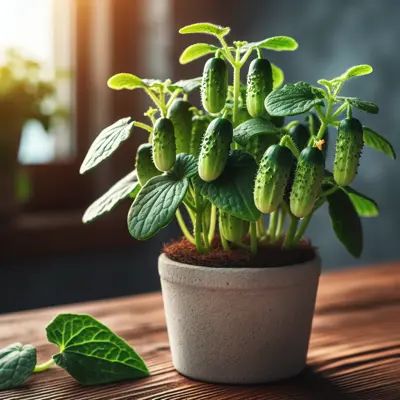
A compact bush variety perfect for small gardens and containers, producing an abundance of 4-5 inch pickling cucumbers on space-saving plants. This determinate variety concentrates its harvest, making it ideal for batch pickling projects. Despite its small stature, Picklebush delivers full-sized flavor and the crisp texture that makes perfect pickles.
Harvest
50-55d
Days to harvest
Sun
Full sun
Zones
2–11
USDA hardiness
Height
8-18 inches
Planting Timeline
Showing dates for Picklebush Cucumber in USDA Zone 7
All Zone 7 cucumber →Zone Map
Click a state to update dates
Picklebush Cucumber · Zones 2–11
Growing Details
Succession Planting
Picklebush is a compact bush type, but it still produces in a defined window rather than churning out fruit for months, so staggered sowings are worth the effort. In zone 7, direct sow every 3 weeks starting May 1 through mid-June — that gets you two to three flushes before heat shuts down fruit set. Stop by June 15; plants germinating after that point won't size up reliably once daytime highs are consistently above 90°F, which arrives across most of Georgia by mid-July.
If you have row cover and a sheltered spot, an early August direct sow can work for a fall run. At 50–55 days to harvest, seeds in the ground by August 1 finish before the average first frost in zone 7b (mid-October). That fall planting often runs cleaner on disease pressure too — Podosphaera xanthii slows down noticeably as nights drop below 60°F.
Complete Growing Guide
This determinate variety's concentrated harvest window of 50-55 days means you should succession plant every two weeks if you want continuous pickles rather than one large glut. Picklebush thrives in full sun with consistently moist, well-draining soil rich in organic matter, though its compact 8-18 inch frame makes it less heat-stressed than sprawling types in containers. Watch for spider mites on stressed plants and powdery mildew in humid conditions, but the bush habit naturally improves air circulation compared to vining varieties. Avoid over-nitrogen fertilization, which promotes leafy growth at the expense of flowering. A practical tip: plant Picklebush densely—it won't sprawl—allowing you to maximize yield in tight spaces and making hand-harvesting at the ideal 4-5 inch size easier and faster than managing longer vines.
Light: Full sun (6 or more hours of direct sunlight a day). Soil: High Organic Matter. Soil pH: Neutral (6.0-8.0). Drainage: Good Drainage, Moist. Height: 0 ft. 8 in. - 1 ft. 6 in.. Spread: 3 ft. 0 in. - 8 ft. 0 in.. Spacing: 12 inches-3 feet. Growth rate: Rapid. Maintenance: Medium. Propagation: Seed. Regions: Coastal, Mountains, Piedmont.
Harvesting
Harvest Picklebush cucumbers when they reach 4-5 inches in length with a deep green color and firm skin that yields slightly to gentle pressure, avoiding the yellowing that signals overmaturity. These compact plants produce prolifically, so check plants every 1-2 days during peak season to maintain continuous harvests rather than allowing fruits to mature all at once. Picking regularly encourages more blooms and extends productivity throughout the season. For batch pickling projects, timing your harvests to gather 10-15 fruits at similar ripeness stages within a few days ensures uniform pickling results and optimal texture in your finished product.
The "vegetable" is botanically a fruit– it is a pepo, a berry with a hard rind. Long and cylindrical, starting out prickly when young and smoothing out to a bumpy surface as it matures. Length and girth can vary based on cultivar and culinary purpose but grow at least 3 in long. Some varieties are bred to be seedless.
Color: Green. Type: Berry. Length: > 3 inches. Width: 1-3 inches.
Garden value: Edible, Showy
Harvest time: Summer
Edibility: Fruits are commonly eaten raw or pickled. Fresh cucumbers last in the fridge for about a week.
Storage & Preservation
Fresh Picklebush cucumbers maintain peak quality for 3-5 days at room temperature or up to one week refrigerated in a perforated plastic bag. Store at 45-50°F if possible—standard refrigerator temperatures can cause chilling injury, leading to pitting and decay.
For preservation, Picklebush excels at traditional pickling methods. Their firm flesh holds up beautifully in brine, making them perfect for dill pickles, bread and butter pickles, and relishes. Process within 24 hours of harvest for maximum crispness. The concentrated harvest makes batch canning efficient—you'll have enough cucumbers at once for multiple canning sessions.
Freezing isn't recommended for whole cucumbers due to their high water content, but you can freeze them in prepared relishes or gazpacho. Dehydrating cucumber chips works well for healthy snacks, though they lose their characteristic crunch. Fermented pickles showcase Picklebush's natural flavor while extending storage to several months when properly prepared.
History & Origin
The documented origins of Picklebush Cucumber remain largely unclear in readily available horticultural records. This variety appears to represent a modern compact breeding line developed during the late 20th century push for determinate, bush-type vegetables suited to home gardeners and container cultivation. Its development likely emerged from conventional breeding programs at seed companies rather than university research institutions, as commercial breeders increasingly selected for concentrated harvests and space-efficient growth habits. The "Picklebush" name itself reflects its functional purpose rather than geographic heritage, suggesting intentional marketing toward specific-use gardeners rather than preservation of an heirloom lineage.
Origin: Himalaya to Northern Thailand
Advantages
- +Compact bush variety thrives in small gardens and container growing spaces.
- +Concentrated harvest window makes Picklebush ideal for batch pickling projects.
- +Produces abundant 4-5 inch pickles with excellent crisp, firm texture.
- +Matures quickly in just 50-55 days from planting to harvest.
- +Easy to grow variety suitable for beginner gardeners.
Considerations
- -Susceptible to bacterial wilt spread by cucumber beetles and other pests.
- -Prone to powdery mildew and downy mildew in humid conditions.
- -Determinate growth means shorter overall production season compared to indeterminate types.
- -Requires consistent pest management to prevent cucumber beetle and squash bug damage.
Companion Plants
Radishes are the first thing I'd tuck in around Picklebush — they draw cucumber beetles away from the main planting and you're pulling them before the cucumbers need the ground space anyway. Tagetes patula marigolds do real below-ground work as a nematode suppressor, which matters in zone 7 Georgia gardens where Meloidogyne pressure builds quickly in warm sandy soil. Nasturtiums pull aphid colonies onto themselves and off the vines. Keep rosemary, sage, and other aromatic herbs well away — their volatile oils appear to inhibit cucumber germination and early root development — and give potatoes and melons their own separate beds entirely; all three share enough disease vectors and root-zone competition that planting them together tends to drag down every crop in the group.
Plant Together
Radishes
Repel cucumber beetles and improve soil structure while maturing quickly
Marigolds
Deter aphids, whiteflies, and cucumber beetles with their strong scent
Nasturtiums
Act as trap crop for cucumber beetles and aphids, drawing pests away
Beans
Fix nitrogen in soil to benefit cucumber growth and provide natural mulch
Corn
Provides natural trellis support and creates beneficial shade
Sunflowers
Attract beneficial insects and provide windbreak protection
Dill
Attracts beneficial predatory insects that control cucumber pests
Lettuce
Acts as living mulch, conserving soil moisture cucumbers need
Keep Apart
Aromatic Herbs
Strong scents from sage, rosemary can inhibit cucumber growth and flavor
Potatoes
Compete for nutrients and may harbor diseases harmful to cucumbers
Melons
Cross-pollination concerns and increased competition for space and nutrients
Nutrition Facts
Per 100g serving. % Daily Value based on 2,000 calorie diet. Source: USDA FoodData Central (FDC #169225)
Pests & Disease Resistance
Resistance
Good resistance to scab and cucumber mosaic virus
Common Pests
Cucumber beetles, squash bugs, aphids
Diseases
Bacterial wilt, powdery mildew, downy mildew
Troubleshooting Picklebush Cucumber
What you'll see, why it happens, and what to do about it.
Plants wilting progressively despite regular watering — lower leaves show brown spots or scorched edges, roots look lumpy or knotted when you pull one up
Likely Causes
- Root-knot nematodes (Meloidogyne spp.) — microscopic soil pests that form galls on roots, cutting off water and nutrient uptake
- Sandy soil that drains too fast can mask the problem, since extra irrigation doesn't reverse the wilt
What to Do
- 1.Pull an affected plant and check the roots — if you see hard, irregular swellings (not just nodules from nitrogen-fixing bacteria), that's Meloidogyne; submit a soil sample to your state's Plant Disease and Insect Clinic to confirm
- 2.Don't replant cucurbits in that bed for at least 2–3 seasons; rotate with non-hosts like corn or small grains
- 3.Sow a dense planting of Tagetes patula marigolds as a cover crop the following season — both marigolds and 'Caliente' mustard have documented suppressive effects on nematode populations in warm-season beds
Cucumbers tasting bitter, especially near the skin, even on otherwise healthy-looking fruit
Likely Causes
- Cucurbitacin buildup triggered by environmental stress — uneven watering, heat spikes above 90°F, soil pH below 6.0, or low fertility; NC State Extension identifies all of these as direct triggers
- Fruit left on the vine past pickling size, or misshapen fruit from poor pollination
What to Do
- 1.Keep soil moisture consistent at 1 inch per week; lay 3–4 inches of straw mulch to buffer soil temperature and slow evaporation during July heat
- 2.Test soil pH and lime up if you're below 6.0 — Picklebush wants 6.0 to 7.0
- 3.Pick at 3–4 inches for pickling; anything yellowing on the vine is already past it
White powdery coating spreading across upper leaf surfaces, usually appearing mid-season after the first flush of fruit
Likely Causes
- Powdery mildew — most likely Podosphaera xanthii, the cucurbit-specific strain; it moves fast in dense plantings even without high humidity
- Plants spaced tighter than 8 inches, which cuts off airflow between the compact bush canopy
What to Do
- 1.Strip and trash (not compost) any leaf that's more than 30% coated — getting infected material off the plant slows spread more than any spray
- 2.Apply potassium bicarbonate or diluted neem oil on a 7–10 day interval; these work as early intervention, not rescue treatments once the whole canopy is gone
- 3.At next planting, space at the full 12-inch end of the range and orient rows to catch prevailing airflow
Frequently Asked Questions
How many Picklebush cucumber plants do I need for canning?▼
Can Picklebush cucumbers grow in containers?▼
When should I plant Picklebush cucumber seeds?▼
What's the difference between Picklebush and regular pickling cucumbers?▼
Are Picklebush cucumbers good for fresh eating?▼
How long do Picklebush cucumbers take to grow?▼
Zone-by-Zone Planting Calendar
| Zone | Indoor Start | Transplant | Direct Sow | Harvest |
|---|---|---|---|---|
| Zone 3 | May – May | June – July | June – August | August – October |
| Zone 4 | April – May | June – June | June – July | August – October |
| Zone 5 | April – April | May – June | May – July | August – September |
| Zone 6 | April – April | May – June | May – July | July – September |
| Zone 7 | March – April | May – May | May – June | July – August |
| Zone 8 | March – March | April – May | April – June | June – August |
| Zone 9 | February – February | March – April | March – May | May – July |
| Zone 10 | January – February | March – March | March – April | May – June |
| Zone 1 | June – June | July – August | July – September | September – August |
| Zone 2 | May – June | July – July | July – August | September – September |
| Zone 11 | January – January | February – February | February – March | April – May |
| Zone 12 | January – January | February – February | February – March | April – May |
| Zone 13 | January – January | February – February | February – March | April – May |
Growing Guides from Wind River Greens
Sources & References
External authority sources used in compiling this guide.
See the Methodology page for how this data is sourced, what's AI-assisted, and known limitations.