Phoenix
Solanum lycopersicum 'Phoenix'
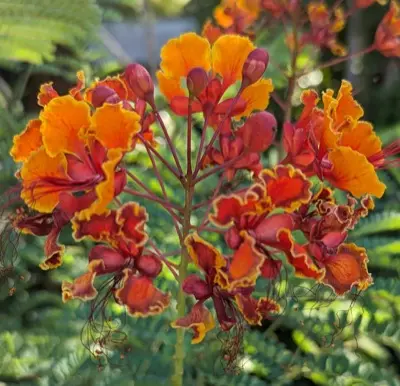
A heat-tolerant determinate variety specifically developed for hot climate growing where other tomatoes fail. Produces excellent yields of smooth, crack-resistant fruits even in extreme summer heat and humidity. The compact plants set fruit reliably in temperatures that would cause other varieties to drop their blossoms.
Harvest
68-72d
Days to harvest
Sun
Full sun
Zones
10–11
USDA hardiness
Height
1-10 feet
Planting Timeline
Showing dates for Phoenix in USDA Zone 7
All Zone 7 tomato →Zone Map
Click a state to update dates
Phoenix · Zones 10–11
Growing Details
Complete Growing Guide
Phoenix thrives in heat that stresses conventional tomatoes, making it ideal for planting in late spring through early summer in hot climates where spring sowings of standard varieties often fail. Its compact determinate habit means plants won't sprawl excessively even in intense heat, though providing afternoon shade cloth during temperatures above 95°F helps prevent fruit scalding and improves flavor development. Unlike indeterminate varieties, Phoenix sets concentrated fruit early and finishes relatively quickly, so succession planting every 2-3 weeks extends your harvest rather than relying on a single planting. While generally pest-resistant, monitor for spider mites during dry heat spells, which can stress stressed plants despite Phoenix's hardiness. A practical advantage: because Phoenix produces most fruit within a tight window due to its determinate nature, plan simultaneous harvesting and processing rather than expect prolonged daily picking.
Light: Full sun (6 or more hours of direct sunlight a day). Soil: Clay, High Organic Matter, Loam (Silt), Sand. Soil pH: Acid (<6.0), Neutral (6.0-8.0). Drainage: Good Drainage, Moist. Height: 1 ft. 0 in. - 10 ft. 0 in.. Spread: 1 ft. 0 in. - 4 ft. 0 in.. Spacing: 3 feet-6 feet. Growth rate: Rapid. Maintenance: High. Propagation: Seed. Regions: Coastal, Mountains, Piedmont.
Harvesting
Harvest Phoenix tomatoes when they reach full mature color—a deep red throughout with no green shoulders—and feel slightly soft to gentle pressure, indicating peak juice content and flavor development. These determinate plants typically produce their fruit in concentrated flushes rather than continuous trickle harvesting, so plan for a main harvest window around days 68-72 from transplant. For best results with Phoenix specifically, pick fruits in early morning after the dew dries but before midday heat intensifies, as this timing preserves the crack-resistant skin quality this variety is bred for while maximizing the sweet-acid balance.
The fruits are smooth, shiny, glossy, and are classified as berries. The size, shape, and color will vary depending on the variety or cultivar. The color of the fruits may be red, yellow, orange, green, purple, or pink. The fruits may contain over 100 yellow to light brown seeds.
Color: Gold/Yellow, Green, Orange, Pink, Purple/Lavender, Red/Burgundy, Variegated. Type: Berry. Length: > 3 inches. Width: > 3 inches.
Garden value: Edible, Showy
Harvest time: Fall, Summer
Edibility: The fruits or berries of the tomato are edible. They may be eaten raw, cooked, dried, or processed. They are a rich source of Vitamin A, Vitamin C, folic acid, and antioxidants. Lycopene is an antioxidant that gives the tomato its rich red color. Many plants will drop fruit when ripe or the fruit will come off easily. Tomatoes will continue to ripen once picked. Store them at room temperature.
Storage & Preservation
Store freshly harvested Phoenix tomatoes at room temperature (68–72°F) away from direct sunlight until fully ripe, then refrigerate at 50–55°F with 85–90% humidity to extend shelf life to two to three weeks. Keep them in a paper bag or shallow container to allow air circulation and prevent condensation. Ripe tomatoes should never be stored below 50°F, as chilling damages flavor and texture.
Phoenix's balanced acid-sweet profile makes it excellent for canning whole or as sauce; pressure-can at 10 pounds PSI for quart jars (40 minutes) or use a water bath for acidified preparations. Freezing works well for cooking applications—simply core and freeze whole on trays, then transfer to bags. For long-term storage, consider drying slices at 135–145°F until brittle, then store in airtight containers. The firm flesh and meaty interior render Phoenix particularly suitable for sauce-making, where seeds and excess moisture can be strained for concentrated results.
History & Origin
The Phoenix tomato was developed as a heat-tolerant determinate variety specifically engineered for challenging growing conditions where conventional tomatoes struggle. While detailed documentation of its specific breeder, year of introduction, and originating institution remains limited in widely available sources, the variety represents decades of tomato breeding work focused on heat and humidity tolerance. Phoenix likely emerged from crossing programs within commercial seed companies or agricultural research institutions that prioritized blossom-set reliability and crack resistance under extreme temperatures. The variety belongs to a lineage of heat-adapted cultivars developed throughout the latter twentieth century as demand grew for productive tomatoes suitable for tropical, subtropical, and hot continental climates where traditional varieties consistently failed.
Origin: Peru
Advantages
- +Thrives in extreme heat and humidity where other tomatoes fail completely
- +Reliably sets fruit in temperatures that cause blossom drop in other varieties
- +Produces crack-resistant fruits despite intense summer conditions and weather stress
- +Compact determinate growth suits small spaces and container gardening well
- +Matures quickly in just 68-72 days for early harvests
Considerations
- -Susceptible to bacterial speck and early blight in humid climates
- -Prone to sunscald damage during extreme heat and intense sunlight exposure
- -Vulnerable to spider mites and aphids during hot weather periods
Companion Plants
Basil planted 12–18 inches from the base may interfere with aphid and thrips host-finding through its volatile oils — and in a Southeast Georgia summer, anything that cuts aphid pressure before it triggers a sooty mold problem on your lower foliage is worth the bed space. French marigolds (Tagetes patula specifically, not the tall African types) earn their spot along the border: their root secretions suppress root-knot nematodes over a full season, which matters in the sandy clay soils common around here. Carrots and lettuce fill the 6–8 inch gaps between cages without competing meaningfully for water at 24–30 inch tomato spacing. Fennel is the one to pull before it even flowers — its allelopathic root exudates stunt most garden vegetables within a few feet, and brassicas clustered nearby just concentrate cabbage looper and aphid pressure in one convenient patch.
Plant Together
Basil
Repels aphids, whiteflies, and hornworms while potentially improving tomato flavor
Marigold
Deters nematodes, aphids, and whiteflies with natural compounds
Carrots
Helps break up soil for tomato roots and doesn't compete for space
Parsley
Attracts beneficial insects like hoverflies that prey on tomato pests
Chives
Repels aphids and may help prevent fungal diseases
Nasturtium
Acts as trap crop for aphids and cucumber beetles, draws pests away
Lettuce
Provides living mulch and maximizes garden space without root competition
Oregano
Repels many insects and may enhance tomato growth and flavor
Keep Apart
Black Walnut
Releases juglone toxin that causes wilting and death in tomatoes
Fennel
Inhibits growth through allelopathic compounds that stunt tomato development
Brassicas
Compete for similar nutrients and may stunt tomato growth when planted nearby
Nutrition Facts
Per 100g serving. % Daily Value based on 2,000 calorie diet. Source: USDA FoodData Central (FDC #321360)
Pests & Disease Resistance
Resistance
Excellent resistance to verticillium wilt, fusarium wilt, and heat stress
Common Pests
Tomato hornworm, spider mites in hot weather, aphids
Diseases
Bacterial speck, early blight, sunscald in extreme conditions
Troubleshooting Phoenix
What you'll see, why it happens, and what to do about it.
Lower leaves developing dark brown bullseye rings, working up the plant around days 45–55 after transplant
Likely Causes
- Early blight (Alternaria solani) — a soil-borne fungus that splashes onto foliage during rain or overhead irrigation
- Crowded canopy blocking airflow between plants spaced under 24 inches
What to Do
- 1.Strip affected leaves immediately and trash them — don't compost
- 2.Mulch the bed 3–4 inches deep with straw to stop rain splash from the soil surface
- 3.NC State Extension recommends rotating nightshades out of the same bed for at least three to four years; for persistent tomato diseases, five to seven years is the safer target
Plant wilts during the day even when soil is moist, doesn't recover overnight, and no obvious root rot is visible
Likely Causes
- Southern bacterial wilt (Ralstonia solanacearum) — a soil-borne bacterium that persists indefinitely once a bed is infested
- Early-stage southern stem blight (Sclerotium rolfsii) before visible fungal signs appear at the soil line
What to Do
- 1.Dig up and destroy the entire plant including roots — do not compost
- 2.NC State Extension notes that R. solanacearum stays in infested soil indefinitely; move tomatoes to a new bed or switch to containers with bagged soil that never contacts native ground
- 3.Check the soil line for white cottony mycelium and small tan sclerotia about the size of mustard seeds — that confirms S. rolfsii rather than bacterial wilt, though the disposal steps are the same
Large irregular holes in foliage or entire leaflets stripped from the stem; dark green pellet droppings visible on leaves below
Likely Causes
- Tomato hornworm (Manduca quinquemaculata) — caterpillars reach 3–4 inches and can strip a branch overnight
- Missing early instars because the green-and-white striping makes them nearly invisible against stems until they're already large
What to Do
- 1.Hand-pick in early morning when caterpillars are sluggish; drop them in soapy water
- 2.If you find hornworms covered in small white rice-shaped cocoons, leave them — those are braconid wasp pupae, and that hornworm is already done feeding
- 3.Bt (Bacillus thuringiensis) applied to foliage kills young instars well; less effective once they exceed about 2 inches
Large papery white or tan patches on the sun-facing side of fruit, usually appearing after a heat spike or after heavy pruning
Likely Causes
- Sunscald — direct UV exposure on fruit that had been shaded by foliage before pruning or leaf drop
- Removing too much of the upper canopy at once, which exposes developing clusters that had no prior hardening
What to Do
- 1.Leave more foliage on the upper canopy than you think you need going into July and August, when afternoon temps in a Georgia garden routinely push past 90°F
- 2.Drape 30–40% shade cloth over cages during peak afternoon hours to limit further damage on already-exposed clusters
- 3.Cut away the damaged tissue and use the rest of the fruit promptly — sunscalded tomatoes won't heal on the vine, but the unaffected flesh is fine
Frequently Asked Questions
How long does Phoenix tomato take to grow from seed?▼
Can you grow Phoenix tomatoes in containers?▼
Is Phoenix tomato good for beginners?▼
What does Phoenix tomato taste like?▼
When should I plant Phoenix tomato seeds?▼
Phoenix vs Roma tomato - what's the difference?▼
Zone-by-Zone Planting Calendar
| Zone | Indoor Start | Transplant | Direct Sow | Harvest |
|---|---|---|---|---|
| Zone 3 | April – April | June – July | — | August – October |
| Zone 4 | March – April | June – June | — | August – October |
| Zone 5 | March – March | May – June | — | August – October |
| Zone 6 | March – March | May – June | — | July – September |
| Zone 7 | February – March | April – May | — | July – September |
| Zone 8 | February – February | April – May | — | June – August |
| Zone 9 | January – January | March – April | — | May – July |
| Zone 10 | January – January | February – March | — | May – July |
| Zone 1 | May – May | July – August | — | September – August |
| Zone 2 | April – May | June – July | — | September – September |
| Zone 11 | January – January | January – February | — | April – June |
| Zone 12 | January – January | January – February | — | April – June |
| Zone 13 | January – January | January – February | — | April – June |
Growing Guides from Wind River Greens
Sources & References
External authority sources used in compiling this guide.
See the Methodology page for how this data is sourced, what's AI-assisted, and known limitations.