Indigo Rose
Solanum lycopersicum 'Indigo Rose'
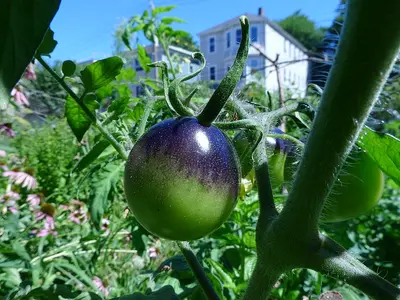
Indigo Rose is a striking hybrid tomato with deep purple-black skin and red flesh, reaching maturity in approximately 65 days. This visually distinctive variety sets itself apart through its unique anthocyanin-rich pigmentation, making it as ornamental as it is edible. The flavor profile is mild and slightly sweet with subtle berry notes, offering a complex taste experience compared to standard red tomatoes. Medium-sized fruits are ideal for fresh slicing and are particularly prized by gardeners seeking heirloom-like character in a modern hybrid package.
Harvest
65d
Days to harvest
Sun
Full sun
Zones
3–8
USDA hardiness
Height
3-4 feet
Planting Timeline
Showing dates for Indigo Rose in USDA Zone 7
All Zone 7 tomato →Zone Map
Click a state to update dates
Indigo Rose · Zones 3–8
Growing Details
Complete Growing Guide
Light: Full sun (6 or more hours of direct sunlight a day). Soil: Clay, High Organic Matter, Loam (Silt), Sand, Shallow Rocky. Soil pH: Alkaline (>8.0), Neutral (6.0-8.0). Drainage: Good Drainage, Moist, Occasionally Dry. Height: 3 ft. 0 in. - 4 ft. 0 in.. Spread: 1 ft. 6 in. - 2 ft. 0 in.. Spacing: 12 inches-3 feet. Growth rate: Rapid. Maintenance: High, Medium. Propagation: Seed. Regions: Coastal, Mountains, Piedmont.
Harvesting
Brown oblong and 5-ribbed achene with blunt ends. The wider end has a bristles across the top.
Color: Brown/Copper, Cream/Tan. Type: Achene.
Edibility: Leaves can be used in salads or cooked to reduce bitter flavor. Roots can be dried and used as a coffee substitute.
Storage & Preservation
Store ripe Indigo Rose tomatoes at room temperature for 3-5 days to maintain optimal flavor and texture. The purple pigments are sensitive to cold, so avoid refrigerating unless fully ripe and you need to extend storage by 2-3 days. Keep fruits out of direct sunlight, which can cause uneven ripening and color fading.
For preservation, these cocktail-sized tomatoes excel in freezing whole for smoothies and sauces – the anthocyanins remain stable through freezing. Simply wash, remove stems, and freeze on baking sheets before transferring to freezer bags. The unique color makes them spectacular in fermented salsas, where the purple hues create visually striking results. Dehydrating works well too; slice in half and dry until leathery for concentrated flavor. The high antioxidant content makes them ideal for juicing and blending into health-focused preserves.
History & Origin
Documentation of Indigo Rose's specific breeding origins is limited in publicly available sources. The variety belongs to the radicchio lineage within Cichorium intybus, a Mediterranean chicory tradition with centuries of cultivation in Italy. Indigo Rose appears to have emerged from modern vegetable breeding programs focused on improving radicchio reliability in diverse climates, particularly addressing the tipburn and bottom rot susceptibility that plagued earlier cultivars. While the exact breeder and introduction year remain unclear, the variety's emphasis on heat and cold tolerance suggests development within North American seed companies or university breeding initiatives during the late 20th century focused on expanding radicchio's growing range beyond its traditional cool-season production window.
Origin: Europe
Advantages
- +Attracts: Bees, Butterflies
- +Edible: Leaves can be used in salads or cooked to reduce bitter flavor. Roots can be dried and used as a coffee substitute.
- +Fast-growing
Considerations
- -High maintenance
Companion Plants
Basil at 12–18 inches away doesn't compete for water and you'll harvest both at the same time, so it earns its spot on practical grounds alone. French marigold (Tagetes patula specifically) releases thiophenes from its roots that suppress root-knot nematodes (Meloidogyne spp.) in the top 12 inches of soil — plant it as a dense border, not a token plant or two. Carrots and parsley stay shallow enough to avoid crowding Indigo Rose's root zone. Fennel produces allelopathic compounds that stunt most vegetables; keep it at least 20 feet away. Brassicas share several soil-borne pathogens with tomatoes and will complicate your 3-to-4-year rotation math if they're cycling through the same beds.
Plant Together
Basil
Repels aphids, whiteflies, and hornworms while potentially improving tomato flavor
Marigold
Deters nematodes, aphids, and whiteflies with natural pest-repelling compounds
Carrots
Help break up soil for tomato roots and don't compete for nutrients
Parsley
Attracts beneficial insects like hoverflies and parasitic wasps that control pests
Lettuce
Provides living mulch, conserves soil moisture, and utilizes different root zones
Nasturtiums
Acts as trap crop for aphids and cucumber beetles while repelling whiteflies
Chives
Repels aphids and may help prevent fungal diseases with sulfur compounds
Peppers
Share similar growing requirements and don't compete significantly for resources
Keep Apart
Black Walnut
Produces juglone toxin that causes tomato wilt and stunted growth
Fennel
Releases allelopathic compounds that inhibit tomato growth and development
Corn
Both attract corn earworm/tomato hornworm and compete for similar nutrients
Brassicas
Heavy nitrogen feeders that compete with tomatoes and may stunt growth
Nutrition Facts
Per 100g serving. % Daily Value based on 2,000 calorie diet. Source: USDA FoodData Central (FDC #321360)
Pests & Disease Resistance
Resistance
Good general disease resistance, less prone to cracking
Common Pests
Tomato hornworm, aphids, flea beetles
Diseases
Early blight, late blight, fusarium wilt
Troubleshooting Indigo Rose
What you'll see, why it happens, and what to do about it.
Lower leaves developing dark bullseye spots with yellow halos, starting around day 40–50 after transplant
Likely Causes
- Early blight (Alternaria solani) — soil-borne fungus that splashes up onto foliage during rain or overhead irrigation
- Overcrowded planting at less than 24 inches reducing airflow between plants
What to Do
- 1.Strip affected lower leaves immediately and trash them — don't compost
- 2.Lay 3–4 inches of straw mulch under plants to stop soil splash
- 3.Per NC State Extension IPM guidance, rotate tomatoes out of that bed for at least 3–4 years; 5–7 years if blight pressure has been heavy
Large patches of foliage turning gray-green and collapsing fast — sometimes within 48 hours — with water-soaked lesions on fruit
Likely Causes
- Late blight (Phytophthora infestans) — NC State Extension flags this as a highly destructive disease that spreads rapidly in cool, wet weather
- Infected transplants or a nearby potato planting acting as inoculum source
What to Do
- 1.Remove and bag all affected plant material immediately — do not compost
- 2.Pull entirely any plant where more than a third of the foliage is affected, and dispose of it off-site
- 3.Don't replant tomatoes or potatoes in that spot the following season; Phytophthora debris persists through winter in mild climates
Plant wilts during the day and doesn't recover overnight, even with adequate soil moisture — no obvious stem damage visible at the surface
Likely Causes
- Fusarium wilt (Fusarium oxysporum f. sp. lycopersici) — vascular fungus that blocks water uptake; brown streaking inside the stem confirms it
- Southern bacterial wilt (Ralstonia solanacearum) — NC State Extension notes this is distinct from fusarium and doesn't respond to the same controls
- Root-knot nematodes (Meloidogyne spp.) compromising root function
What to Do
- 1.Cut the stem near the base: brown internal discoloration points to fusarium; a slimy bacterial ooze when the cut end is submerged in water points to bacterial wilt
- 2.Dig up and destroy the entire plant including roots — NC State Extension is explicit that affected material should not be composted
- 3.If soil-borne wilt keeps recurring in that spot, NC State Extension recommends growing tomatoes in containers and ensuring container mix never contacts native soil
Newest leaves at the top of the plant turning bright yellow, sometimes curling or puckering, while lower foliage stays green
Likely Causes
- Glyphosate herbicide drift — NC State Extension's diagnostic guide lists bright yellow coloration of the youngest leaves as a characteristic symptom of glyphosate exposure in tomatoes
- Cucumber mosaic virus (CMV) — aphid-transmitted; causes similar yellowing and shoestring leaf distortion
- Soil pH above 6.8 locking out iron or manganese
What to Do
- 1.Think back to whether herbicide was sprayed nearby on a windy day — mild drift exposure won't kill the plant, and new growth may come in clean, but there's no chemical remedy
- 2.Flip leaves and check the undersides for aphid colonies; a strong blast of water knocks most off, or apply insecticidal soap if populations have built up
- 3.Test soil pH — if it's above 6.8, work granular sulfur into the top 6 inches to bring it back into the 6.0–6.8 range Indigo Rose needs
Frequently Asked Questions
How long does Indigo Rose tomato take to grow?▼
Can you grow Indigo Rose tomatoes in containers?▼
What does Indigo Rose tomato taste like?▼
Why are my Indigo Rose tomatoes not turning purple?▼
Is Indigo Rose good for beginners?▼
When should I plant Indigo Rose tomato seeds?▼
Zone-by-Zone Planting Calendar
| Zone | Indoor Start | Transplant | Direct Sow | Harvest |
|---|---|---|---|---|
| Zone 1 | May – May | July – August | — | September – August |
| Zone 2 | April – May | June – July | — | September – September |
| Zone 11 | January – January | January – February | — | April – June |
| Zone 12 | January – January | January – February | — | April – June |
| Zone 13 | January – January | January – February | — | April – June |
| Zone 3 | April – April | June – July | — | August – October |
| Zone 4 | March – April | June – June | — | August – October |
| Zone 5 | March – March | May – June | — | August – October |
| Zone 6 | March – March | May – June | — | July – September |
| Zone 7 | February – March | April – May | — | July – September |
| Zone 8 | February – February | April – May | — | June – August |
| Zone 9 | January – January | March – April | — | May – July |
| Zone 10 | January – January | February – March | — | May – July |
Growing Guides from Wind River Greens
Sources & References
External authority sources used in compiling this guide.
- ExtensionNC State Extension
- USDAUSDA FoodData Central
See the Methodology page for how this data is sourced, what's AI-assisted, and known limitations.