Grape Tomato
Solanum lycopersicum
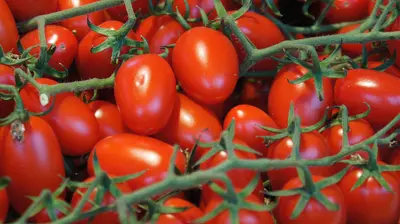
Grape Tomato is a hybrid variety producing clusters of small, oblong fruits resembling grapes, typically reaching harvest maturity in 60 days. These bite-sized tomatoes are prized for their intense sweetness and balanced acidity, offering a concentrated tomato flavor superior to many cherry varieties. The plants thrive in full sun with well-drained, organic-rich soil and are notably easy to grow, making them ideal for both beginners and experienced gardeners. Grape tomatoes excel for fresh eating, snacking directly off the vine, and adding to salads. Their manageable size and prolific production make them a favorite for containers and small-space gardening.
Harvest
60d
Days to harvest
Sun
Full sun
Zones
10–11
USDA hardiness
Height
1-10 feet
Planting Timeline
Showing dates for Grape Tomato in USDA Zone 7
All Zone 7 tomato →Zone Map
Click a state to update dates
Grape Tomato · Zones 10–11
Growing Details
Complete Growing Guide
With a 60-day maturity and indeterminate growth habit reaching up to 10 feet, Juliet tomatoes require sturdy support systems and consistent pruning to manage vigorous vines and maximize air circulation, which is especially important given their dense cluster production of 12-18 fruits per set. Plant after frost danger passes and provide full sun for at least six to eight hours daily to develop that concentrated, balanced flavor. While this cultivar demonstrates excellent disease resistance, its dense foliage can still trap moisture—water at soil level in early morning and avoid wetting leaves to prevent fungal issues. The good crack resistance means you can maintain consistent soil moisture without excessive splitting, but monitor for spider mites in hot, dry conditions, as they favor warm microclimates around indeterminate vines. Pinch off lower suckers weekly and remove some interior foliage once plants set fruit to prevent shading and promote even ripening across clusters.
Light: Full sun (6 or more hours of direct sunlight a day). Soil: Clay, High Organic Matter, Loam (Silt), Sand. Soil pH: Acid (<6.0), Neutral (6.0-8.0). Drainage: Good Drainage, Moist. Height: 1 ft. 0 in. - 10 ft. 0 in.. Spread: 1 ft. 0 in. - 4 ft. 0 in.. Spacing: 3 feet-6 feet. Growth rate: Rapid. Maintenance: High. Propagation: Seed. Regions: Coastal, Mountains, Piedmont.
Harvesting
Harvest Juliet tomatoes when they reach their characteristic deep red color with a subtle shine, measuring approximately 2 to 2¼ inches long and feeling slightly yielding to gentle pressure. These grape tomatoes are ready to pick when fully colored but still firm enough to handle without bruising. Unlike single-harvest varieties, Juliet produces continuously throughout the season, so pick ripe fruits every few days to encourage ongoing production and prevent the plant from directing energy toward overripe berries. A helpful timing tip: harvest in early morning when fruits are coolest, as this extends their shelf life and minimizes stress on the vine, particularly important given Juliet's excellent storage capability.
The fruits are smooth, shiny, glossy, and are classified as berries. The size, shape, and color will vary depending on the variety or cultivar. The color of the fruits may be red, yellow, orange, green, purple, or pink. The fruits may contain over 100 yellow to light brown seeds.
Color: Gold/Yellow, Green, Orange, Pink, Purple/Lavender, Red/Burgundy, Variegated. Type: Berry. Length: > 3 inches. Width: > 3 inches.
Garden value: Edible, Showy
Harvest time: Fall, Summer
Edibility: The fruits or berries of the tomato are edible. They may be eaten raw, cooked, dried, or processed. They are a rich source of Vitamin A, Vitamin C, folic acid, and antioxidants. Lycopene is an antioxidant that gives the tomato its rich red color. Many plants will drop fruit when ripe or the fruit will come off easily. Tomatoes will continue to ripen once picked. Store them at room temperature.
Storage & Preservation
Store freshly harvested grape tomatoes at room temperature away from direct sunlight until fully ripe, then refrigerate at 50-55°F with 85-90% humidity in a breathable container or paper bag. They'll keep for up to two weeks refrigerated, though flavor diminishes below 55°F. For preservation, freezing works well for cooking applications—wash, quarter, and freeze on a tray before bagging. These tomatoes excel at dehydrating due to their concentrated flavor and low water content; slice lengthwise, dry at 135°F until leathery, and store in airtight containers. Hot water canning is also suitable if crushed or whole-packed with acid. For longer-term storage, consider fermenting halved tomatoes with salt and herbs, which develops complex flavor and keeps several months refrigerated. Their small size makes them ideal for dehydrating whole or halved, producing intensely flavored sun-dried tomato substitutes.
History & Origin
The grape tomato category emerged in the 1990s as seed companies and breeders developed smaller, sweeter cherry tomato alternatives with improved disease resistance and shelf life. While the specific origin of the Juliet variety is not extensively documented in widely available historical records, it was introduced by a major seed company as part of this broader movement toward high-performing, disease-resistant small fruiting tomatoes. Juliet's development reflects late-twentieth-century breeding priorities emphasizing productivity, crack resistance, and commercial viability alongside home garden appeal, building on decades of tomato domestication and modern hybrid breeding techniques.
Origin: Peru
Advantages
- +Exceptional disease resistance with multiple pathogen protections in trials
- +Prolific producer yielding 12-18 fruits per cluster consistently
- +Rich, sweet flavor with balanced acidity ideal for fresh applications
- +Excellent crack resistance and shelf life for storage and transport
- +AAS Award winner demonstrating superior performance and reliability
Considerations
- -Susceptible to early and late blight in humid conditions
- -Vulnerable to multiple common pests including hornworms and spider mites
- -Requires indeterminate support structure and regular pruning maintenance
Companion Plants
Basil planted 12–18 inches away is worth doing — the aromatic oils appear to disrupt whitefly host-finding, and you'll harvest both crops at the same time anyway. Marigolds (Tagetes spp.) do something more measurable: their roots secrete alpha-terthienyl, which suppresses root-knot nematodes (Meloidogyne spp.) in the top few inches of soil — a real benefit in beds with a nematode history. Carrots and chives stay shallow enough that they don't fight tomatoes for the same root zone. Fennel is the one to pull before it even gets close — it releases allelopathic compounds that visibly stunt tomato growth, and after 60 days of waiting on fruit, that's not a gamble worth taking.
Plant Together
Basil
Repels aphids, whiteflies, and hornworms while potentially improving tomato flavor
Marigold
Deters nematodes, aphids, and whiteflies with natural pest-repelling compounds
Carrots
Help break up soil for tomato roots and don't compete for nutrients
Parsley
Attracts beneficial insects like parasitic wasps that control tomato pests
Chives
Repel aphids and may improve tomato flavor and growth
Nasturtiums
Act as trap crops for aphids and cucumber beetles, protecting tomatoes
Lettuce
Grows well in tomato shade and helps retain soil moisture
Oregano
Repels many garden pests and may enhance tomato flavor
Keep Apart
Black Walnut
Produces juglone toxin that causes tomato wilt and stunted growth
Fennel
Inhibits tomato growth through allelopathic compounds
Brassicas
Compete for nutrients and may stunt tomato growth when planted too close
Corn
Both attract corn earworm/tomato fruitworm, increasing pest pressure
Nutrition Facts
Per 100g serving. % Daily Value based on 2,000 calorie diet. Source: USDA FoodData Central (FDC #321360)
Pests & Disease Resistance
Resistance
Early Blight (Intermediate); Late Blight (Intermediate)
Common Pests
Tomato hornworm, aphids, spider mites, whiteflies
Diseases
Early blight, late blight, bacterial spot, fusarium wilt
Troubleshooting Grape Tomato
What you'll see, why it happens, and what to do about it.
Large gray-green patches of foliage collapsing fast — within a few days — plus dark, water-soaked spots on fruit
Likely Causes
- Late blight (Phytophthora infestans) — NC State's PDIC monitors this annually; timing varies year to year but it tends to hit during cool, wet stretches
- Planting tomatoes in the same bed two or more years running, which lets the pathogen cycle persist in soil and debris
What to Do
- 1.Pull and bag affected plants immediately — don't compost them; the pathogen spreads fast to neighboring plants
- 2.Rotate nightshades out of that bed for at least 3 to 4 years; NC State Extension notes the rotation period for some tomato diseases may need to be 5 to 7 years
- 3.If late blight is confirmed, consider growing in containers next season and make sure container soil never contacts native garden soil
Plant wilts during the day even when soil is moist, with no visible mold or lesions on stems
Likely Causes
- Fusarium wilt (Fusarium oxysporum f. sp. lycopersici) — soilborne fungus that clogs vascular tissue; cut a stem and look for brown discoloration inside
- Southern bacterial wilt (Ralstonia solanacearum) — also soilborne, also causes sudden collapse; confirmed by the 'streaming test' (cut stem in water and watch for milky threads)
- Root-knot nematodes (Meloidogyne spp.) — common in sandy soils, starve the root system's ability to move water
What to Do
- 1.Dig up and destroy affected plants including the roots — don't leave them in the bed
- 2.Rotate out of that spot; if rotation isn't feasible, grow in containers with fresh potting mix that doesn't touch native soil
- 3.Look for hybrid grape tomato varieties with 'F' (Fusarium) or 'N' (nematode) resistance codes on the label — NC State Extension specifically recommends checking for these designations
Frequently Asked Questions
How long does it take for grape tomatoes to grow from seed?▼
Can you grow grape tomatoes in containers?▼
Are grape tomatoes good for beginners?▼
What's the difference between grape tomatoes and cherry tomatoes?▼
When should I plant grape tomato seeds?▼
How many grape tomatoes does one plant produce?▼
Zone-by-Zone Planting Calendar
| Zone | Indoor Start | Transplant | Direct Sow | Harvest |
|---|---|---|---|---|
| Zone 3 | April – April | June – July | — | August – October |
| Zone 4 | March – April | June – June | — | August – October |
| Zone 5 | March – March | May – June | — | July – September |
| Zone 6 | March – March | May – June | — | July – September |
| Zone 7 | February – March | April – May | — | July – September |
| Zone 8 | February – February | April – May | — | June – August |
| Zone 9 | January – January | March – April | — | May – July |
| Zone 10 | January – January | February – March | — | May – July |
| Zone 1 | May – May | July – August | — | September – August |
| Zone 2 | April – May | June – July | — | September – September |
| Zone 11 | January – January | January – February | — | April – June |
| Zone 12 | January – January | January – February | — | April – June |
| Zone 13 | January – January | January – February | — | April – June |
Growing Guides from Wind River Greens
Sources & References
External authority sources used in compiling this guide.
See the Methodology page for how this data is sourced, what's AI-assisted, and known limitations.