Grape
Solanum lycopersicum
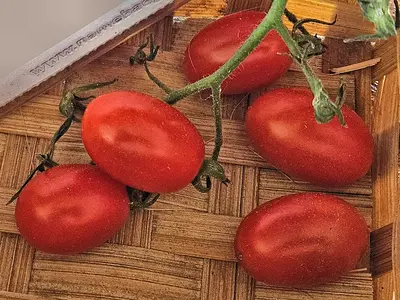
Grape tomatoes are small, elongated fruits that resemble their namesake in size and shape, typically measuring 1-2 inches long. These hybrid varieties mature in approximately 60 days from transplant, producing prolific clusters of sweet, bite-sized fruits. Their concentrated, sweet-tangy flavor makes them ideal for fresh eating, salads, and snacking straight from the vine. Grape tomatoes are prized for their consistent sweetness and firm texture, often preferred over cherry tomatoes for their balanced taste. The compact growth habit and abundant yields make them a popular choice for both home gardeners and container cultivation.
Harvest
60d
Days to harvest
Sun
Full sun
Zones
10–11
USDA hardiness
Height
1-10 feet
Planting Timeline
Showing dates for Grape in USDA Zone 7
All Zone 7 tomato →Zone Map
Click a state to update dates
Grape · Zones 10–11
Growing Details
Complete Growing Guide
Begin seeds indoors six to eight weeks before your last spring frost date, sowing them about one-quarter inch deep in seed-starting mix. Grape tomatoes germinate reliably and should emerge within five to ten days at temperatures around 70°F. Harden off seedlings gradually over one to two weeks before transplanting outdoors after all danger of frost has passed. You can direct sow seeds into warm soil if you prefer, though starting indoors gives you a head start on the 60-day countdown to harvest.
Space plants 24 to 36 inches apart in full sun, as Grape's vigorous indeterminate growth demands good air circulation. Prepare beds with rich, well-draining soil amended with compost or aged manure; these plants are heavy feeders and benefit from organic matter mixed in before planting. Ensure the soil drains well, as poor drainage contributes to several problems this variety faces, particularly blossom-end rot.
Water deeply and consistently throughout the season, aiming for one to two inches per week depending on rainfall and heat. The key with Grape is maintaining even moisture—irregular watering stresses plants and triggers the blossom-end rot that plagues this cultivar despite its other strengths. Mulch around plants to regulate soil moisture and temperature. Feed every two to three weeks with balanced fertilizer once flowering begins, switching to lower-nitrogen formulas if foliage becomes too lush at the expense of fruit.
Grape's disease resistance is one of its greatest assets, yet early blight, late blight, and septoria leaf spot can still appear in humid conditions or crowded plantings. Improve air flow by pruning lower suckers and removing lower leaves as plants grow. Watch for aphids and whiteflies starting in mid-summer; spray with neem oil or insecticidal soap at the first sign of infestation. Tomato hornworms and spider mites are less common problems but monitor plant health regularly.
Trellising or caging Grape is essential—plants reach four to ten feet tall and become unwieldy without support. Sturdy cages or vertical string systems keep fruit off the ground, improving air circulation and reducing disease pressure. Prune selectively to maintain airflow, but avoid excessive pruning that exposes fruit to sunscald.
Many gardeners overlook calcium management when growing Grape, despite blossom-end rot being a persistent issue. Add crushed eggshells or gypsum to planting holes and maintain consistent watering discipline. This variety sets abundant clusters—typically 12 to 18 fruits per truss—so proper nutrition and hydration are crucial to prevent calcium deficiency that manifests as dark, sunken patches on fruit bottoms. With attention to these details, Grape rewards with months of abundant, flavorful cherry-sized tomatoes perfect for salads and fresh preparations.
Harvesting
Harvest Juliet tomatoes when they reach their characteristic deep red shiny color and measure approximately 2 to 2¼ inches long, feeling firm yet yielding slightly to gentle pressure. This indeterminate variety produces fruit continuously throughout the season, so plan for regular harvesting every few days rather than a single harvest window. Pick fruits at full color maturity to maximize the concentrated tomato flavor, as they will not ripen significantly after detachment from the vine. The excellent vine storage capability means you can leave mature fruits on the plant for several days without quality loss, allowing flexibility in your harvesting schedule while ensuring peak sweetness and tangy taste.
The fruits are smooth, shiny, glossy, and are classified as berries. The size, shape, and color will vary depending on the variety or cultivar. The color of the fruits may be red, yellow, orange, green, purple, or pink. The fruits may contain over 100 yellow to light brown seeds.
Color: Gold/Yellow, Green, Orange, Pink, Purple/Lavender, Red/Burgundy, Variegated. Type: Berry. Length: > 3 inches. Width: > 3 inches.
Garden value: Edible, Showy
Harvest time: Fall, Summer
Edibility: The fruits or berries of the tomato are edible. They may be eaten raw, cooked, dried, or processed. They are a rich source of Vitamin A, Vitamin C, folic acid, and antioxidants. Lycopene is an antioxidant that gives the tomato its rich red color. Many plants will drop fruit when ripe or the fruit will come off easily. Tomatoes will continue to ripen once picked. Store them at room temperature.
Storage & Preservation
Store freshly harvested Grape tomatoes at room temperature away from direct sunlight for optimal flavor retention, or refrigerate at 50–55°F with moderate humidity if extended storage is needed. They'll keep fresh for two to three weeks when chilled, though they're best used within a week at room temperature for peak taste. Their small size and thin skin make them excellent candidates for freezing whole on a tray before bagging, which works particularly well for cooking applications. For long-term preservation, consider canning as sauce or paste, which captures their concentrated sweetness beautifully, or dry them in a low oven or dehydrator to intensify their flavor for later use in pasta and grain dishes. Fermentation is another option worth exploring with these cherry-sized fruits. Their prolific production means you'll have plenty to experiment with multiple preservation methods without sacrificing fresh eating.
History & Origin
Juliet tomato emerged from professional breeding work focused on improving the Santa grape tomato lineage, a popular indeterminate cherry-type cultivar. Developed as a larger sister variety to Santa, Juliet was specifically selected for enhanced disease resistance, fruit size, and cluster productivity while maintaining the sweet-tangy flavor profile characteristic of grape tomatoes. The variety gained recognition through official All-America Selections recognition and has become widely adopted in commercial and home gardens. However, specific breeder attribution, breeding institution, and exact development year remain undocumented in readily available sources, reflecting typical industry practice where seed companies often withhold detailed breeding genealogies for competitive advantage.
Origin: Peru
Advantages
- +Produces 12-18 fruits per cluster for abundant harvests
- +Excellent crack resistance means fewer split fruits
- +Rich, concentrated tomato flavor perfect for fresh eating
- +Disease-resistant variety performs well in trial conditions
- +AAS Winner recognition indicates superior quality and performance
Considerations
- -Susceptible to early blight and late blight diseases
- -Vulnerable to multiple pests including hornworms and spider mites
- -Requires 60 days to maturity, extended growing season needed
- -Indeterminate growth requires consistent staking and pruning maintenance
Companion Plants
Basil and French marigolds (Tagetes patula) are the two worth planting deliberately. Basil's volatile oils may reduce aphid and thrips pressure through scent interference — and in our zone 7 Georgia summers, having it 12–18 inches from the tomato cage means you're picking both at once, which is reason enough on its own. Marigolds are doing something more measurable: their roots release alpha-terthienyl, a compound with documented nematicidal activity against root-knot nematodes in the surrounding soil. Nematodes are a persistent problem in Georgia's sandy loam plots, so this is worth a deliberate row rather than just a decorative border. Carrots and parsley stay shallow-rooted, don't compete hard for water, and their umbel flowers attract parasitic wasps that target tomato hornworm (Manduca quinquemaculata).
Fennel is the companion to pull from the list entirely — it releases allelopathic compounds that stunt neighboring vegetables, including tomatoes, within roughly 18 inches. Brassicas complicate matters differently: they share enough soil-borne pathogens with tomatoes that planting them together undermines any rotation schedule you're trying to keep. Black walnut produces juglone, which is directly toxic to Solanum species — any established tree with a canopy spread overhead is a problem, and moving the planting 60 feet away is the only real fix.
Plant Together
Basil
Repels aphids, whiteflies, and hornworms while potentially improving tomato flavor
Marigold
Deters nematodes, aphids, and whiteflies with natural pest-repelling compounds
Carrots
Helps break up soil for tomato roots and doesn't compete for nutrients
Parsley
Attracts beneficial insects like hoverflies that prey on tomato pests
Nasturtiums
Acts as trap crop for aphids and cucumber beetles, drawing pests away from tomatoes
Chives
Repels aphids and may improve tomato flavor and growth
Asparagus
Tomatoes repel asparagus beetles while asparagus doesn't compete for space
Peppers
Similar growing requirements and can help deter some common pests
Keep Apart
Black Walnut
Produces juglone toxin that causes tomato wilt and stunted growth
Fennel
Inhibits tomato growth through allelopathic compounds
Corn
Both attract corn earworm/tomato fruitworm, increasing pest pressure
Brassicas
Can stunt tomato growth and compete for nutrients, especially when mature
Nutrition Facts
Per 100g serving. % Daily Value based on 2,000 calorie diet. Source: USDA FoodData Central (FDC #321360)
Pests & Disease Resistance
Resistance
Early Blight (Intermediate); Late Blight (Intermediate)
Common Pests
Aphids, whiteflies, tomato hornworm, spider mites
Diseases
Early blight, late blight, septoria leaf spot, blossom end rot
Troubleshooting Grape
What you'll see, why it happens, and what to do about it.
Lower leaves developing dark brown bullseye-ringed spots, starting around day 40–50 after transplant, working up the plant
Likely Causes
- Early blight (Alternaria solani) — a soil-borne fungus that splashes onto foliage during rain or overhead irrigation
- Crowded spacing under 18 inches that traps humidity at the base of the plant
What to Do
- 1.Strip affected leaves immediately and bag them for the trash — not the compost pile
- 2.Lay 3–4 inches of straw mulch around the base to stop rain-splash transmission
- 3.NC State Extension recommends rotating nightshades out of a bed for at least 3–4 years; for some tomato diseases the rotation period is five to seven years
Large sections of foliage turning gray-green and collapsing fast — sometimes overnight — with water-soaked dark patches on fruit
Likely Causes
- Late blight (Phytophthora infestans) — not a true fungus, spreads by wind-borne spores, thrives in cool wet nights above 50°F paired with warm days
- Nearby infected potato plantings, which share the same pathogen
What to Do
- 1.Remove and bag every affected plant immediately — late blight moves fast enough to wipe out a planting in under a week
- 2.Do not compost any plant tissue; destroy or bag it
- 3.NC State's Plant Disease and Insect Clinic monitors late blight timing in North Carolina annually — check their alerts before the season to know if pressure is high in your region
Blossom end of fruit turning tan, then leathery black — usually shows up on the first fruits of the season
Likely Causes
- Blossom end rot — a calcium deficiency in the developing fruit driven by inconsistent soil moisture (calcium uptake is water-dependent, not usually a soil calcium shortage)
- Irregular watering: letting the soil dry out between waterings, then flooding it
What to Do
- 1.Water on a consistent schedule — grape tomatoes need high, steady moisture; drip irrigation on a timer is the most reliable fix
- 2.Mulch heavily to buffer soil moisture swings
- 3.Check soil pH; at 6.0–6.8 calcium is available — if you're below 6.0, a lime application before next season helps
Small circular spots with tan centers and dark borders appearing on leaves of both tomatoes and nearby peppers simultaneously
Likely Causes
- Septoria leaf spot (Septoria lycopersici) — fungal, spreads by rain splash, often confused with early blight but spots are smaller and more uniform
- Bacterial speck (Pseudomonas syringae pv. tomato) — can look nearly identical; NC State Extension notes that bacterial and fungal leaf spots on tomatoes can be surprisingly difficult to tell apart
What to Do
- 1.Remove and dispose of spotted leaves; prune interior foliage to open up airflow
- 2.Stop overhead watering — switch to drip or soaker hose
- 3.Rotate the bed out of tomatoes and peppers (both are susceptible) for at least 3 seasons
Frequently Asked Questions
How long does it take to grow grape tomatoes from seed?▼
Can you grow grape tomatoes in containers?▼
Are grape tomatoes good for beginners?▼
What's the difference between grape tomatoes and cherry tomatoes?▼
When should I plant grape tomato seeds?▼
Do grape tomatoes need pruning?▼
Zone-by-Zone Planting Calendar
| Zone | Indoor Start | Transplant | Direct Sow | Harvest |
|---|---|---|---|---|
| Zone 3 | April – April | June – July | — | August – October |
| Zone 4 | March – April | June – June | — | August – October |
| Zone 5 | March – March | May – June | — | July – September |
| Zone 6 | March – March | May – June | — | July – September |
| Zone 7 | February – March | April – May | — | July – September |
| Zone 8 | February – February | April – May | — | June – August |
| Zone 9 | January – January | March – April | — | May – July |
| Zone 10 | January – January | February – March | — | May – July |
| Zone 1 | May – May | July – August | — | September – August |
| Zone 2 | April – May | June – July | — | September – September |
| Zone 11 | January – January | January – February | — | April – June |
| Zone 12 | January – January | January – February | — | April – June |
| Zone 13 | January – January | January – February | — | April – June |
Growing Guides from Wind River Greens
Sources & References
External authority sources used in compiling this guide.
See the Methodology page for how this data is sourced, what's AI-assisted, and known limitations.