Cherry Belle
Solanum lycopersicum 'Cherry Belle'
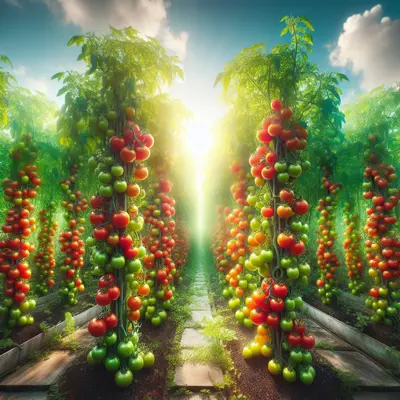
A prolific cherry tomato that produces hundreds of sweet, bite-sized fruits throughout the growing season. These vigorous indeterminate plants are perfect for snacking straight from the garden and add color to salads and appetizers. Kids love picking and eating these candy-like tomatoes right off the vine.
Harvest
65-70d
Days to harvest
Sun
Full sun
Zones
10–11
USDA hardiness
Height
1-10 feet
Planting Timeline
Showing dates for Cherry Belle in USDA Zone 7
All Zone 7 tomato →Zone Map
Click a state to update dates
Cherry Belle · Zones 10–11
Growing Details
Complete Growing Guide
Cherry Belle's indeterminate growth habit demands consistent support structures and pruning to manage vigorous vines that can reach 10 feet, distinguishing it from determinate varieties that naturally bush out. Plant seedlings 6-8 weeks before your last frost and space them 24-36 inches apart to ensure adequate air circulation, critical for preventing early blight and powdery mildew that readily attack dense foliage. This cultivar's prolific branching tendency means strategic pruning of lower suckers improves fruit quality and reduces disease pressure. Begin harvesting around day 65-70, but note that Cherry Belle continues producing until frost, so succession planting isn't necessary. The abundant fruit load can stress plants during drought, so maintain consistent moisture—fluctuating water availability causes blossom-end rot and fruit splitting. A practical tip: prune aggressively in mid-summer to redirect energy toward ripening rather than excessive vine growth, which maximizes your harvest window in shorter growing seasons.
Light: Full sun (6 or more hours of direct sunlight a day). Soil: Clay, High Organic Matter, Loam (Silt), Sand. Soil pH: Acid (<6.0), Neutral (6.0-8.0). Drainage: Good Drainage, Moist. Height: 1 ft. 0 in. - 10 ft. 0 in.. Spread: 1 ft. 0 in. - 4 ft. 0 in.. Spacing: 3 feet-6 feet. Growth rate: Rapid. Maintenance: High. Propagation: Seed. Regions: Coastal, Mountains, Piedmont.
Harvesting
Cherry Belle tomatoes reach peak readiness when they develop a deep, glossy red color throughout and feel slightly soft to gentle finger pressure, typically measuring about three-quarters of an inch in diameter. These indeterminate plants benefit from continuous harvesting rather than waiting for a single large crop; picking ripe fruits regularly encourages the plant to produce additional blooms and extend your harvest window through the season. For optimal flavor, harvest in the early morning after the dew dries but before intense midday heat, as this preserves the fruit's natural sugars and ensures the sweetest taste. Fruits that yield slightly to gentle pressure will have developed full sweetness and are ready for immediate enjoyment or storage.
The fruits are smooth, shiny, glossy, and are classified as berries. The size, shape, and color will vary depending on the variety or cultivar. The color of the fruits may be red, yellow, orange, green, purple, or pink. The fruits may contain over 100 yellow to light brown seeds.
Color: Gold/Yellow, Green, Orange, Pink, Purple/Lavender, Red/Burgundy, Variegated. Type: Berry. Length: > 3 inches. Width: > 3 inches.
Garden value: Edible, Showy
Harvest time: Fall, Summer
Edibility: The fruits or berries of the tomato are edible. They may be eaten raw, cooked, dried, or processed. They are a rich source of Vitamin A, Vitamin C, folic acid, and antioxidants. Lycopene is an antioxidant that gives the tomato its rich red color. Many plants will drop fruit when ripe or the fruit will come off easily. Tomatoes will continue to ripen once picked. Store them at room temperature.
Storage & Preservation
Cherry Belle tomatoes store best at room temperature (65-72°F) in a single layer, away from direct sunlight and ethylene-producing fruits like bananas. Keep them uncovered or in a breathable container to prevent moisture buildup. At these conditions, expect a fresh shelf life of 5-7 days after harvest. For longer preservation, freezing works exceptionally well—simply wash, core, and freeze whole on a tray before transferring to freezer bags for up to eight months. Their small size makes them ideal candidates for whole canning, whether in tomato sauce, piccalilli, or simple syrup for sweet preserves. Sun-drying intensifies their natural sweetness, though the process takes 2-3 weeks. Hot water bath canning is recommended for any preserved product. Their thin skins dry readily, making dehydration another practical option for concentrated flavor in cooking or snacking. Because these fruits are so palatable raw, many gardeners find simple freezing the most practical method—you'll have ready-to-use tomatoes for winter sauces without the processing time.
History & Origin
Cherry Belle was introduced by Burpee Seeds in the 1960s as part of the company's effort to develop early-maturing, high-yielding cherry tomato cultivars suited to home gardeners. The variety emerged during a period of significant breeding activity focused on cherry tomatoes, which were gaining popularity in American home gardens. While detailed records of the specific breeding lineage and parent varieties used to develop Cherry Belle are limited, the cultivar represents the broader mid-century horticultural movement toward compact, productive ornamental-fruiting tomato varieties. The variety's ease of cultivation and prolific nature made it a commercial success and established it as a reliable standard in seed catalogs.
Origin: Peru
Advantages
- +Produces hundreds of sweet, bite-sized fruits perfect for snacking
- +Indeterminate vigorous plants ensure continuous harvesting throughout season
- +Very sweet flavor with bright intensity appeals to kids
- +Matures quickly in 65-70 days with excellent disease resistance
Considerations
- -Highly susceptible to late blight, early blight, powdery mildew
- -Attractive to birds, hornworms, aphids, and spider mites
- -Requires consistent staking and pruning due to indeterminate growth
Companion Plants
French marigold (Tagetes patula) is worth planting right in the row — not just on the border — because it releases alpha-terthienyl from its roots, which suppresses root-knot nematodes (Meloidogyne spp.) in the surrounding soil. Basil is a useful row companion too; the pest-deterrent claims are debated, but it earns its 12 inches of bed space on practical grounds. Fennel is the one to keep far away — 20 feet minimum — because it produces allelopathic compounds that stunt nearby root development. Brassicas are a poor neighbor for a different reason: they compete for the same soil nutrients and can shuttle aphid colonies straight into your tomato canopy.
Plant Together
Basil
Repels aphids and whiteflies, may improve tomato flavor
Marigold
Deters nematodes and aphids with natural compounds
Carrots
Loosens soil for tomato roots and doesn't compete for nutrients
Parsley
Attracts beneficial insects like hoverflies and parasitic wasps
Chives
Repels aphids and may improve tomato growth and flavor
Nasturtium
Acts as trap crop for aphids and cucumber beetles
Lettuce
Provides ground cover and doesn't compete for space or nutrients
Oregano
Repels various pests and may enhance tomato flavor
Keep Apart
Black Walnut
Produces juglone toxin that causes tomato wilt and stunted growth
Fennel
Inhibits tomato growth through allelopathic compounds
Corn
Both attract corn earworm and compete for similar nutrients
Brassicas
May stunt tomato growth and compete for soil nutrients
Nutrition Facts
Per 100g serving. % Daily Value based on 2,000 calorie diet. Source: USDA FoodData Central (FDC #171719)
Pests & Disease Resistance
Resistance
Good resistance to cracking and splitting. Moderate disease resistance typical of cherry varieties.
Common Pests
Birds, tomato hornworm, aphids, spider mites
Diseases
Late blight, early blight, powdery mildew
Troubleshooting Cherry Belle
What you'll see, why it happens, and what to do about it.
Large patches of foliage turning gray-green and collapsing fast — sometimes overnight — with dark, water-soaked spots on fruit
Likely Causes
- Late blight (Phytophthora infestans) — airborne spores, spreads rapidly in cool, wet conditions
- Planting tomatoes in the same bed year after year, which lets the pathogen establish in soil and debris
What to Do
- 1.Pull and bag the entire plant — don't compost it, and don't leave debris on the soil surface
- 2.NC State Extension notes the rotation period for avoiding some tomato diseases may be five to seven years — that's not a typo, plan a real multi-year rotation
- 3.If late blight has hit your garden before, grow in containers with fresh potting mix kept completely separate from native soil
Lower leaves developing small brown bullseye spots with yellow halos, starting around day 45–50 after transplant
Likely Causes
- Early blight (Alternaria solani) — soil-borne fungus that splashes up onto foliage during rain or overhead watering
- Dense canopy with poor airflow between plants spaced closer than 24 inches
What to Do
- 1.Strip affected lower leaves immediately and trash them — not the compost pile
- 2.Lay 3–4 inches of straw mulch around the base to cut down on soil splash
- 3.Water at the base, not overhead, and do it in the morning so foliage dries before evening
Whole plant wilting during the day even when soil moisture is adequate, with no obvious fungal growth on stems or leaves
Likely Causes
- Southern bacterial wilt (Ralstonia solanacearum) — soil-borne, enters through roots, no cure once established
- Root-knot nematodes (Meloidogyne spp.) blocking water uptake
- Early stages of southern stem blight (Sclerotium rolfsii) before white mycelium appears at the soil line
What to Do
- 1.Dig up and destroy affected plants including the roots — NC State Extension is explicit that leaving roots behind keeps the pathogen viable in the soil for years
- 2.Cherry Belle carries no listed nematode resistance (unlike cultivars coded 'N' on the seed packet); if nematodes recur, trial grafting onto a resistant rootstock
- 3.Relocate tomatoes to a new bed or switch to containers with potting mix that never contacts native soil
Frequently Asked Questions
How long does Cherry Belle tomato take to grow from seed?▼
Can you grow Cherry Belle tomatoes in containers?▼
Is Cherry Belle good for beginner gardeners?▼
What does Cherry Belle tomato taste like?▼
When should I plant Cherry Belle tomato seeds?▼
How many Cherry Belle tomatoes does one plant produce?▼
Zone-by-Zone Planting Calendar
| Zone | Indoor Start | Transplant | Direct Sow | Harvest |
|---|---|---|---|---|
| Zone 1 | May – May | July – August | — | September – August |
| Zone 2 | April – May | June – July | — | September – September |
| Zone 11 | January – January | January – February | — | April – June |
| Zone 12 | January – January | January – February | — | April – June |
| Zone 13 | January – January | January – February | — | April – June |
| Zone 3 | April – April | June – July | — | August – October |
| Zone 4 | March – April | June – June | — | August – October |
| Zone 5 | March – March | May – June | — | August – October |
| Zone 6 | March – March | May – June | — | July – September |
| Zone 7 | February – March | April – May | — | July – September |
| Zone 8 | February – February | April – May | — | June – August |
| Zone 9 | January – January | March – April | — | May – July |
| Zone 10 | January – January | February – March | — | May – July |
Growing Guides from Wind River Greens
Sources & References
External authority sources used in compiling this guide.
See the Methodology page for how this data is sourced, what's AI-assisted, and known limitations.