Better Boy
Solanum lycopersicum 'Better Boy'
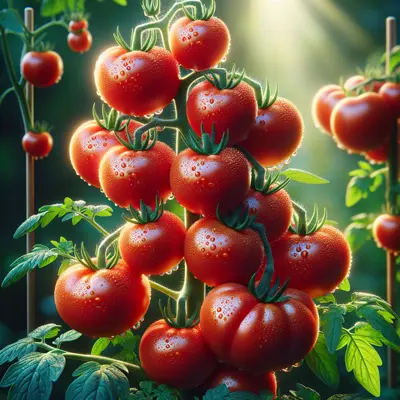
One of the most popular hybrid tomatoes for good reason - this reliable performer produces heavy yields of large, flavorful fruits with excellent disease resistance. Perfect for beginner gardeners who want guaranteed success and experienced growers who appreciate consistent performance. The classic red slicing tomato that delivers on both quantity and quality.
Harvest
70-75d
Days to harvest
Sun
Full sun
Zones
10–11
USDA hardiness
Height
1-10 feet
Planting Timeline
Showing dates for Better Boy in USDA Zone 7
All Zone 7 tomato →Zone Map
Click a state to update dates
Better Boy · Zones 10–11
Growing Details
Succession Planting
Better Boy is an indeterminate hybrid that keeps setting fruit from a single planting all season, so succession sowing doesn't apply the way it does with direct-seeded crops. Start seeds indoors in February or March in zone 7, transplant out between April and May once nighttime temps are holding above 50°F, and that one planting will carry you through a July–September harvest. When late blight or the first hard frost ends the run, pull the plants and plan to keep that bed out of tomatoes — and any other nightshades — for at least 3–4 seasons.
Complete Growing Guide
This indeterminate hybrid thrives on consistent warmth and benefits from planting after soil reaches 60°F, typically mid-spring in most zones. While Better Boy's disease resistance to Verticillium and Fusarium wilts outpaces many heirlooms, it still requires good air circulation to prevent early blight in humid climates. The vigorous, tall growth habit—reaching 8-10 feet in ideal conditions—demands sturdy support or caging from the start, as late staking leads to root damage and fruit cracking. Better Boy produces fruit steadily throughout the season without the bolt tendency of determinate varieties, making succession plantings unnecessary. For maximum yield and fruit quality, prune lower branches once plants establish and remove some foliage in mid-summer to improve air flow and reduce disease pressure. Consistent watering at soil level prevents the blossom-end rot that can plague heavy-fruiting cultivars like this one.
Light: Full sun (6 or more hours of direct sunlight a day). Soil: Clay, High Organic Matter, Loam (Silt), Sand. Soil pH: Acid (<6.0), Neutral (6.0-8.0). Drainage: Good Drainage, Moist. Height: 1 ft. 0 in. - 10 ft. 0 in.. Spread: 1 ft. 0 in. - 4 ft. 0 in.. Spacing: 3 feet-6 feet. Growth rate: Rapid. Maintenance: High. Propagation: Seed. Regions: Coastal, Mountains, Piedmont.
Harvesting
Better Boy tomatoes are ready to harvest when they develop a deep, uniform red color throughout the entire fruit and reach their full mature size of 6-8 ounces, typically around 70-75 days from transplanting. Gently squeeze the fruit—it should yield slightly to pressure without being soft or mushy. This variety produces fruit continuously throughout the season rather than all at once, so harvest ripe tomatoes every 2-3 days to encourage further production and prevent overripe fruit from splitting. For optimal flavor, pick tomatoes in early morning after the dew dries but before afternoon heat peaks, as this preserves their natural sugars and juiciness.
The fruits are smooth, shiny, glossy, and are classified as berries. The size, shape, and color will vary depending on the variety or cultivar. The color of the fruits may be red, yellow, orange, green, purple, or pink. The fruits may contain over 100 yellow to light brown seeds.
Color: Gold/Yellow, Green, Orange, Pink, Purple/Lavender, Red/Burgundy, Variegated. Type: Berry. Length: > 3 inches. Width: > 3 inches.
Garden value: Edible, Showy
Harvest time: Fall, Summer
Edibility: The fruits or berries of the tomato are edible. They may be eaten raw, cooked, dried, or processed. They are a rich source of Vitamin A, Vitamin C, folic acid, and antioxidants. Lycopene is an antioxidant that gives the tomato its rich red color. Many plants will drop fruit when ripe or the fruit will come off easily. Tomatoes will continue to ripen once picked. Store them at room temperature.
Storage & Preservation
Better Boy tomatoes store best at 55–70°F with moderate humidity, ideally in a single layer within a breathable container away from direct sunlight. Avoid refrigeration, which damages flavor and texture. Fresh fruit keeps 5–7 days at room temperature, depending on ripeness at harvest.
This variety's balanced sweet-tart profile makes it excellent for multiple preservation methods. Freezing works well for cooking applications—simply core and freeze whole or chopped. For canning, the moderate acidity suits both water bath and pressure canning; prepare sauce, salsa, or whole pack according to tested recipes. Drying produces good results; slice uniformly and dry at 135–145°F until leathery. Because Better Boy fruits tend to ripen prolifically over several weeks, stagger harvesting slightly underripe to extend your fresh window and spread preservation work across multiple sessions.
History & Origin
The exact origins of 'Better Boy' remain somewhat obscure in published horticultural records, though it emerged as a commercial hybrid in the mid-20th century, likely developed by a major American seed company during the post-World War II expansion of hybrid vegetable breeding. The variety belongs to the lineage of improved slicing tomatoes that built upon earlier indeterminate types, incorporating disease resistance traits—particularly Verticillium and Fusarium wilt tolerance—that were priorities for both home gardeners and commercial growers in that era. While specific breeder attribution and introduction year are not well-documented in accessible sources, 'Better Boy' represents the practical outcomes of systematic hybrid breeding programs that prioritized yield, flavor, and disease resistance over exotic novelty, making it a quintessential product of mid-century American seed development.
Origin: Peru
Advantages
- +Hybrid vigor ensures reliable heavy yields even for inexperienced gardeners
- +Excellent disease resistance to late blight, early blight, and bacterial spot
- +Large, flavorful fruits with balanced sweet-tart flavor perfect for slicing
- +Indeterminate growth habit provides consistent production throughout the season
- +70-75 day maturity offers relatively quick harvests in most climates
Considerations
- -Susceptible to tomato hornworms and cutworms requiring regular pest monitoring
- -Requires sturdy staking or caging due to heavy fruit load
- -Hybrid seeds cannot be saved for replanting next season
- -Susceptible to bacterial spot during wet, humid growing conditions
Companion Plants
Basil goes in 12–18 inches off every Better Boy we grow — I won't pretend the pest-confusion research is airtight, but those two plants have been grown side by side long enough that it's just habit at this point. French marigolds (not the giant African types) pull real weight by suppressing root-knot nematodes near the soil line, which in our zone 7 Georgia sandy loam is a genuine threat, not a theoretical one. Nasturtiums act as a trap crop for aphids — the colonies visibly cluster on them instead of the tomatoes, and you can monitor and remove them easily. Black Walnut is the one to keep far away from your Better Boys; juglone released from the roots is toxic enough to stunt or kill tomatoes, and you won't immediately connect the declining plant to a tree 30 feet away. Fennel is allelopathic to most vegetables and has no business near a tomato bed; Brassicas share enough pest overlap with nightshades that planting them together just concentrates problems.
Plant Together
Basil
Repels aphids and whiteflies, may improve flavor
Marigold
Deters nematodes and whiteflies with natural compounds
Parsley
Attracts beneficial insects like hoverflies and parasitic wasps
Carrots
Loosens soil for tomato roots and doesn't compete for nutrients
Nasturtium
Acts as trap crop for aphids and cucumber beetles
Chives
Repels aphids and may improve tomato growth and flavor
Lettuce
Provides ground cover and benefits from tomato's partial shade
Borage
Attracts pollinators and may repel tomato hornworms
Keep Apart
Black Walnut
Produces juglone which is toxic to tomatoes and causes wilting
Brassicas
Compete for nutrients and may stunt tomato growth
Fennel
Inhibits growth of tomatoes through allelopathic compounds
Nutrition Facts
Per 100g serving. % Daily Value based on 2,000 calorie diet. Source: USDA FoodData Central (FDC #321360)
Pests & Disease Resistance
Resistance
Excellent resistance to Verticillium wilt, Fusarium wilt, and Nematodes (VFN)
Common Pests
Tomato hornworm, cutworms, aphids
Diseases
Late blight, early blight, bacterial spot
Troubleshooting Better Boy
What you'll see, why it happens, and what to do about it.
Large gray-green patches spreading fast across foliage, plus dark water-soaked spots on fruit — can wipe out a plant in days
Likely Causes
- Late blight (Phytophthora infestans) — a water mold that moves fast in cool, wet weather, especially in July and August
- Overhead watering or prolonged leaf wetness that gives spores a window to germinate
What to Do
- 1.Pull and bag infected plants immediately — don't compost them; late blight spores spread to neighbors fast
- 2.Switch to drip irrigation or water at the base early in the morning so leaves dry before nightfall
- 3.NC State's Plant Disease and Insect Clinic monitors late blight arrival each season — check their county-level alerts before symptoms appear so you can apply a copper-based fungicide preventively rather than reactively
Lower leaves developing brown bullseye-ringed spots, starting around day 45–50 after transplant, working up the plant
Likely Causes
- Early blight (Alternaria solani) — a soil-borne fungus that splashes up onto lower foliage during rain or irrigation
- Dense canopy with poor airflow, which keeps foliage wet longer than it should be
What to Do
- 1.Strip the affected lower leaves and throw them in the trash, not the compost pile
- 2.Lay 3–4 inches of straw mulch around the base to stop soil splash from reaching the lower stems
- 3.NC State Extension's IPM guidance recommends rotating nightshades out of the same bed for at least 3–4 years — for some tomato diseases, they note the realistic window is closer to 5–7 years
Youngest leaves at the growing tip turning bright yellow, sometimes distorted, with no obvious spots or lesions
Likely Causes
- Glyphosate herbicide drift from a nearby application — NC State Extension's disease and disorder materials flag tomato as very sensitive, with bright yellow coloration of youngest leaves as a characteristic symptom
- Sulfur deficiency, which also shows first in new growth
What to Do
- 1.Don't apply any herbicide within 50 feet of tomatoes if there's any wind — calm conditions under 5 mph only
- 2.If drift is the culprit, new growth after the exposure event should come in clean; the damage won't spread the way a fungal disease would
- 3.If no herbicide source can be identified, run a soil test — pH above 7.0 can lock out sulfur; bring it back into the 6.0–6.8 range with elemental sulfur
Frequently Asked Questions
How long does Better Boy tomato take to grow from seed?▼
Is Better Boy tomato good for beginners?▼
Can you grow Better Boy tomatoes in containers?▼
What does Better Boy tomato taste like?▼
When should I plant Better Boy tomato seeds?▼
Better Boy vs Early Girl tomato - what's the difference?▼
Zone-by-Zone Planting Calendar
| Zone | Indoor Start | Transplant | Direct Sow | Harvest |
|---|---|---|---|---|
| Zone 3 | April – April | June – July | — | August – October |
| Zone 4 | March – April | June – June | — | August – October |
| Zone 5 | March – March | May – June | — | August – October |
| Zone 6 | March – March | May – June | — | July – September |
| Zone 7 | February – March | April – May | — | July – September |
| Zone 8 | February – February | April – May | — | June – August |
| Zone 9 | January – January | March – April | — | May – July |
| Zone 10 | January – January | February – March | — | May – July |
| Zone 1 | May – May | July – August | — | September – August |
| Zone 2 | April – May | June – July | — | September – September |
| Zone 11 | January – January | January – February | — | April – June |
| Zone 12 | January – January | January – February | — | April – June |
| Zone 13 | January – January | January – February | — | April – June |
Growing Guides from Wind River Greens
Sources & References
External authority sources used in compiling this guide.
See the Methodology page for how this data is sourced, what's AI-assisted, and known limitations.