Voyage 2 Blue
Eustoma grandiflorum
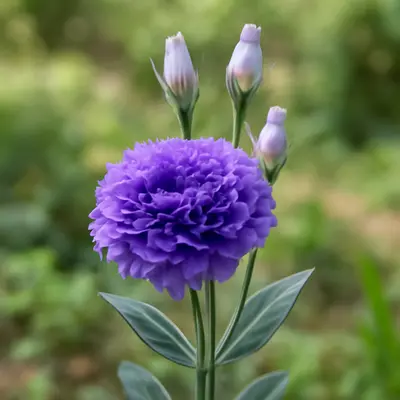
3" fully double blooms in a regal shade of rich purple are lush with abundant layering and ruffling. Group 2, for early spring to summer harvest. Lisianthus is also known as prairie gentian, Texas bluebell, and showy prairie gentian. Pelleted seeds.
Harvest
140-150d
Days to harvest
Sun
Full sun to partial shade
Zones
8–10
USDA hardiness
Height
1-3 feet
Planting Timeline
Showing dates for Voyage 2 Blue in USDA Zone 7
All Zone 7 flower →Zone Map
Click a state to update dates
Voyage 2 Blue · Zones 8–10
Growing Details
Complete Growing Guide
3" fully double blooms in a regal shade of rich purple are lush with abundant layering and ruffling. Group 2, for early spring to summer harvest. Lisianthus is also known as prairie gentian, Texas bluebell, and showy prairie gentian. Pelleted seeds. According to Johnny's Selected Seeds, Voyage 2 Blue is 140 - 150 days to maturity, annual, hybrid (f1). Notable features: Greenhouse Performer, Use for Cut Flowers and Bouquets.
Light: Full sun (6 or more hours of direct sunlight a day), Partial Shade (Direct sunlight only part of the day, 2-6 hours). Soil: Loam (Silt), Sand. Drainage: Good Drainage, Moist. Height: 1 ft. 0 in. - 3 ft. 0 in.. Spread: 0 ft. 9 in. - 1 ft. 0 in.. Maintenance: High. Propagation: Seed.
Harvesting
Voyage 2 Blue reaches harvest at 140 - 150 days from sowing per Johnny's Selected Seeds. Expect 3" at peak. As an annual, harvest continues until frost ends the season.
This is an ornamental variety — not grown for harvest. Enjoy in the garden landscape.
Storage & Preservation
Fresh cut Voyage 2 Blue blooms last 7-10 days in a clean vase with room-temperature water and floral preservative. Change water every 2-3 days, trim stem ends by half an inch at each change, and keep stems away from direct sunlight and ripening fruit (which produces ethylene gas that shortens vase life). Store cut flowers in a cool location (65-70°F) for longest longevity.
Lisianthus dries beautifully and maintains its color remarkably well. Hang bundles upside-down in a dark, dry, well-ventilated space for 2-3 weeks. Dried Voyage 2 Blue flowers are excellent for arrangements and lasting 6-12 months with proper storage. Press individual petals between parchment paper under heavy books for 2-3 weeks to create pressed flowers suitable for crafts, cards, or botanical preservation. Store dried materials in airtight containers away from humidity and direct light.
History & Origin
Voyage 2 Blue is an F1 hybrid developed through controlled cross-pollination. Listed in the Johnny's Selected Seeds catalog.
Origin: Nebraska south to Texas.
Advantages
- +Stunning fully double purple blooms with rich ruffling and abundant layering effects
- +Early Group 2 timing enables spring to summer continuous harvest cycles
- +Pelleted seeds simplify sowing and spacing compared to standard tiny lisianthus seeds
- +Easy difficulty level makes this variety accessible to beginner and intermediate growers
- +3-inch blooms provide substantial cut flower size for professional and home arrangements
Considerations
- -140-150 day maturity requires long season planning and early indoor seed starting
- -Lisianthus notoriously struggles with root rot in poorly draining or overly wet soil
- -Humidity-loving variety may develop powdery mildew in crowded greenhouse conditions
- -Slow early growth stage demands patience before visible progress becomes apparent
Companion Plants
Marigolds — especially French types like 'Petite Gold' — are the most practical companion here. They suppress soil nematodes through thiophene compounds released from their roots, and that matters for a crop like Voyage 2 Blue that sits in the ground 140-plus days. Sweet alyssum fills in at 6–8 inches tall without competing for light, and its small umbel flowers draw parasitic wasps that cut into thrips populations before they shred lisianthus buds. Lavender and catmint both deter spider mites through volatile terpenes and are drought-tolerant once established — they won't compete for the consistent moisture lisianthus needs through a long Georgia summer.
Keep sunflowers out of the same bed. Their root exudates and decomposing debris are allelopathic to many ornamentals, and a crop already pushing 150 days in our zone 7 Georgia heat doesn't need that kind of chemical drag. Black walnut is worse — juglone toxicity is broad and persistent — but sunflowers are the more common mistake because they look like good companions and aren't.
Plant Together
Marigolds
Repel nematodes, aphids, and other pests while attracting beneficial insects
Sweet Alyssum
Attracts beneficial insects like lacewings and provides ground cover
Nasturtiums
Act as trap crops for aphids and cucumber beetles, repel squash bugs
Lavender
Repels moths, fleas, and mosquitoes while attracting pollinators
Catmint
Deters ants, aphids, and rodents while attracting beneficial pollinators
Cosmos
Attracts beneficial insects and provides complementary flower colors
Zinnia
Attracts butterflies and beneficial insects, provides long-lasting blooms
Parsley
Attracts beneficial insects like hoverflies and parasitic wasps
Keep Apart
Black Walnut
Releases juglone toxin that inhibits growth of many flowering plants
Eucalyptus
Allelopathic compounds suppress growth of nearby plants
Sunflowers
Allelopathic root secretions can inhibit germination and growth of smaller flowers
Pests & Disease Resistance
Common Pests
Whiteflies, spider mites, thrips
Diseases
Powdery mildew, root rot (in wet conditions), Fusarium wilt
Troubleshooting Voyage 2 Blue
What you'll see, why it happens, and what to do about it.
Leaves and buds covered in white powdery coating, often first appearing on lower foliage around weeks 8–10 after transplant
Likely Causes
- Powdery mildew (Erysiphe cichoracearum) — thrives in warm days and cool nights with poor airflow
- Crowded spacing under 12 inches that traps humidity around the canopy
What to Do
- 1.Remove and bag the worst-affected leaves immediately — don't compost them
- 2.Spray foliage with a diluted potassium bicarbonate solution (1 tablespoon per gallon of water) every 7 days until symptoms stop spreading
- 3.Space transplants at least 12–15 inches apart next season and avoid overhead irrigation in the evening
Plant suddenly wilts and doesn't recover overnight, stems show brown discoloration at the soil line, roots look brown and mushy
Likely Causes
- Fusarium wilt (Fusarium oxysporum) — soil-borne fungus that blocks the vascular system
- Root rot from Pythium or Phytophthora, usually triggered by waterlogged or poorly drained soil
What to Do
- 1.Pull and discard the affected plant — do not compost it; Fusarium persists in soil for years
- 2.Work in 2–3 inches of coarse perlite or pine bark grit before replanting if your bed stays wet after rain
- 3.Rotate lisianthus out of that bed for at least 3 seasons; NC State Extension recommends full ornamental rotation to reduce Fusarium pressure
Frequently Asked Questions
How long does Voyage 2 Blue lisianthus take to grow from seed to first bloom?▼
Can you grow Voyage 2 Blue lisianthus in containers?▼
Is Voyage 2 Blue lisianthus good for beginners?▼
What is Voyage 2 Blue lisianthus used for?▼
Why are my Voyage 2 Blue lisianthus seedlings dying?▼
When should I plant Voyage 2 Blue lisianthus outdoors?▼
Zone-by-Zone Planting Calendar
| Zone | Indoor Start | Transplant | Direct Sow | Harvest |
|---|---|---|---|---|
| Zone 3 | April – May | June – July | June – August | — |
| Zone 4 | March – April | June – June | June – July | — |
| Zone 5 | March – April | May – June | May – July | — |
| Zone 6 | March – April | May – June | May – July | — |
| Zone 7 | February – March | April – May | April – June | — |
| Zone 8 | February – March | April – May | April – June | — |
| Zone 9 | January – February | March – April | March – May | — |
| Zone 10 | January – January | February – March | February – April | — |
| Zone 1 | May – June | July – August | July – September | — |
| Zone 2 | April – May | June – July | June – August | — |
| Zone 11 | January – January | January – February | January – March | — |
| Zone 12 | January – January | January – February | January – March | — |
| Zone 13 | January – January | January – February | January – March | — |
Growing Guides from Wind River Greens
Sources & References
External authority sources used in compiling this guide.
- BreederJohnny's Selected Seeds
See the Methodology page for how this data is sourced, what's AI-assisted, and known limitations.