Madame Butterfly Rose
Antirrhinum majus
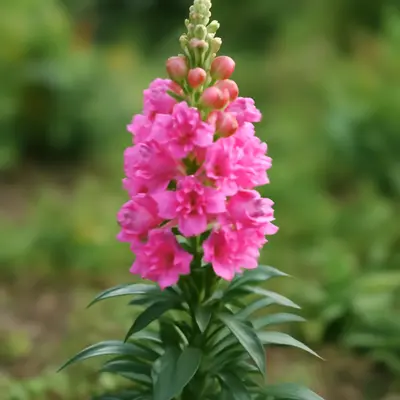
Madame Butterfly Rose is a hybrid flowering rose variety prized for its delicate, fluttering petals that resemble butterfly wings. Reaching maturity in 110-120 days, this easy-to-grow cultivar thrives in full sun to partial shade with well-drained, slightly acidic soil. Its blooms feature a subtle floral fragrance with slight bitterness, making it ideal as a refined garnish used sparingly in culinary applications or as a striking ornamental specimen.
Harvest
110-120d
Days to harvest
Sun
Full sun to partial shade
Zones
7–10
USDA hardiness
Height
0-3 feet
Planting Timeline
Showing dates for Madame Butterfly Rose in USDA Zone 7
All Zone 7 flower →Zone Map
Click a state to update dates
Madame Butterfly Rose · Zones 7–10
Growing Details
Succession Planting
Start seeds indoors 8-10 weeks before your last frost — late February to early March for most zone 7 gardens. Transplant out in April to May once nighttime temps are reliably above 40°F. Madame Butterfly blooms over a long window (110-120 days from seed), and because it keeps producing if you cut it regularly, a single well-timed planting carries most gardeners through the season. A second sow in early June can extend cutting into fall, but don't push past that — snapdragons slow down hard once daytime highs hold above 85-90°F, and germination becomes erratic in warm soil anyway.
Complete Growing Guide
Also known as an azalea type, Madame Butterfly's double petals create full, fluffy blooms for a Victorian look. For outdoor or greenhouse production. Bloom time comparable to group 3-4 "main season" or "all season" varieties. Edible Flowers: The flowers are a colorful garnish for use in salads, desserts, and drinks. The flavor is floral and slightly bitter, so use sparingly. According to Johnny's Selected Seeds, Madame Butterfly Rose is 110 - 120 days to maturity, annual, hybrid (f1). Notable features: Use for Cut Flowers and Bouquets, Edible Flowers, Fragrant.
Light: Full sun (6 or more hours of direct sunlight a day), Partial Shade (Direct sunlight only part of the day, 2-6 hours). Soil: High Organic Matter. Drainage: Good Drainage. Height: 0 ft. 6 in. - 3 ft. 0 in.. Spread: 0 ft. 6 in. - 0 ft. 10 in.. Spacing: Less than 12 inches. Growth rate: Medium. Maintenance: Medium.
Harvesting
Madame Butterfly Rose reaches harvest at 110 - 120 days from sowing per Johnny's Selected Seeds. Expect 3-4 " at peak. As an annual, harvest continues until frost ends the season.
A capsule, half hidden by calyx lobes, short-beaked.
Type: Capsule. Length: 1-3 inches.
Storage & Preservation
Fresh Madame Butterfly roses should be stored in a cool location, ideally in a refrigerator at 35-40°F with 80-90% humidity to extend vase life to 7-14 days. Keep stems in clean, cool water and change water every 2-3 days. For preservation, air-dry blooms by hanging them upside down in a warm, dark, well-ventilated space for 2-3 weeks. Alternatively, press flowers between parchment paper under heavy books for 1-2 weeks to create dried specimens. Freeze flowers in ice cubes with water for decorative cocktail use, maintaining color and shape for several months.
History & Origin
Madame Butterfly Rose is an F1 hybrid developed through controlled cross-pollination. Listed in the Johnny's Selected Seeds catalog.
Origin: Southwestern Europe
Advantages
- +Double petals create stunning, full blooms with authentic Victorian garden aesthetic
- +Long bloom time of 110-120 days provides extended seasonal color display
- +Edible flowers offer unique culinary garnish option for creative plating
- +Easy growing difficulty makes it accessible for beginner and experienced gardeners
- +Suitable for both outdoor gardens and controlled greenhouse production environments
Considerations
- -Floral flavor is slightly bitter, limiting practical culinary use quantity
- -Double petals may trap moisture, increasing susceptibility to fungal diseases
- -Requires regular deadheading to maintain continuous blooming throughout season
Companion Plants
Lavender, catmint, and yarrow are the strongest companions here — all three attract predatory and parasitic wasps that keep aphid populations in check, and none of them compete aggressively for root space at 12-18 inch snapdragon spacing. French marigolds (Tagetes patula) pull double duty: they deter whiteflies above ground while their roots produce thiophenes that discourage soil nematodes. Alliums and rosemary work on a different principle — their volatile compounds confuse pest insects trying to locate a host plant by smell, which matters most during the aphid pressure that peaks in spring on Madame Butterfly's tender new spikes.
Black walnut is the one to stay well away from. Its roots and decomposing leaf litter release juglone, a compound phytotoxic to a wide range of annuals — snapdragons planted within the drip line will wilt and stall without any obvious cause. Large trees are a subtler problem: less about soil chemistry, more about the fact that Madame Butterfly needs at least 4-6 hours of direct sun to set a full flower spike, and a heavy canopy will cut that short before the plant ever hits its stride.
Plant Together
Lavender
Repels aphids, spider mites, and other rose pests while attracting beneficial pollinators
Marigolds
Deters nematodes, aphids, and whiteflies while adding vibrant color contrast
Catmint
Repels ants, aphids, and rodents while attracting beneficial insects
Alliums
Natural fungicide properties help prevent black spot and powdery mildew
Parsley
Attracts beneficial insects like hoverflies that prey on aphids
Clematis
Provides vertical interest and shares similar soil and water requirements
Rosemary
Repels Japanese beetles and other rose pests with strong aromatic oils
Yarrow
Improves soil health and attracts predatory insects that control rose pests
Keep Apart
Black Walnut
Produces juglone toxin that inhibits rose growth and can cause yellowing and death
Large Trees
Compete for nutrients and water while creating excessive shade that reduces flowering
Brassicas
Can attract pests like cabbage worms and compete for similar nutrients
Troubleshooting Madame Butterfly Rose
What you'll see, why it happens, and what to do about it.
Gray fuzzy coating on stems or flowers, usually during cool, wet weather in spring
Likely Causes
- Botrytis cinerea (gray mold) — thrives when humidity is high and air circulation is poor
- Overcrowded planting at less than 12-inch spacing trapping moisture around stems
What to Do
- 1.Remove and bag infected plant material immediately — don't compost it
- 2.Thin or space plants to at least 12 inches so air can move through the bed
- 3.Water at the base only, and water in the morning so foliage dries before nightfall
Orange or rust-colored pustules on the undersides of leaves, with yellowing on top
Likely Causes
- Antirrhinum rust (Puccinia antirrhini) — a fungal disease specific to snapdragons, more common in warm, humid conditions
- Reusing the same bed for snapdragons year after year without rotation
What to Do
- 1.Pull and discard heavily infected leaves — don't leave them on the soil surface
- 2.Apply a sulfur-based fungicide on a 7-10 day interval if the infection is spreading
- 3.Rotate snapdragons to a different bed next season; Puccinia spores persist in soil debris
Soft, distorted new growth with tiny pale or green insects clustered at the shoot tips
Likely Causes
- Aphid infestation (commonly Myzus persicae or Aphis gossypii) — they target tender new growth first
- Excess nitrogen from over-fertilizing, which pushes out the soft tissue aphids prefer
What to Do
- 1.Knock aphids off with a firm stream of water from a hose — repeat every 2-3 days
- 2.Spray with insecticidal soap, making sure to coat the undersides of leaves where they cluster
- 3.Cut back on high-nitrogen fertilizer; steady, moderate feeding produces sturdier stems
Frequently Asked Questions
How long do Madame Butterfly roses last in a vase?▼
Can you grow Madame Butterfly roses in containers?▼
Are Madame Butterfly roses good for beginners?▼
What do Madame Butterfly roses taste like as edible flowers?▼
When should I plant Madame Butterfly roses?▼
Can Madame Butterfly roses be used for weddings and special events?▼
Zone-by-Zone Planting Calendar
| Zone | Indoor Start | Transplant | Direct Sow | Harvest |
|---|---|---|---|---|
| Zone 1 | May – June | July – August | July – September | — |
| Zone 2 | April – May | June – July | June – August | — |
| Zone 11 | January – January | January – February | January – March | — |
| Zone 12 | January – January | January – February | January – March | — |
| Zone 13 | January – January | January – February | January – March | — |
| Zone 3 | April – May | June – July | June – August | — |
| Zone 4 | March – April | June – June | June – July | — |
| Zone 5 | March – April | May – June | May – July | — |
| Zone 6 | March – April | May – June | May – July | — |
| Zone 7 | February – March | April – May | April – June | — |
| Zone 8 | February – March | April – May | April – June | — |
| Zone 9 | January – February | March – April | March – May | — |
| Zone 10 | January – January | February – March | February – April | — |
Growing Guides from Wind River Greens
Sources & References
External authority sources used in compiling this guide.
- BreederJohnny's Selected Seeds
See the Methodology page for how this data is sourced, what's AI-assisted, and known limitations.