Crane Red
Brassica oleracea
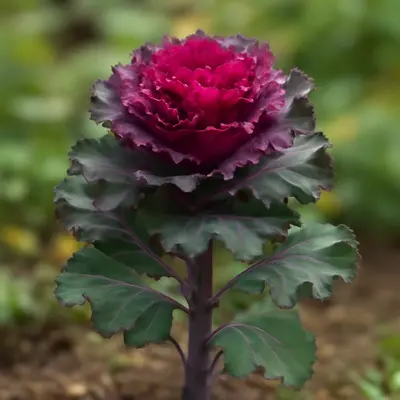
Extend the flower production season with ornamental kale. The Crane series is consistent, uniform, and provides a range of colors. Crane Red has plum centers surrounded by dark green-to-purple outer leaves. Also known as flowering kale and ornamental cabbage.
Harvest
90-110d
Days to harvest
Sun
Full sun to partial shade
Zones
6–9
USDA hardiness
Height
10-24 inches
Planting Timeline
Showing dates for Crane Red in USDA Zone 7
All Zone 7 flower →Zone Map
Click a state to update dates
Crane Red · Zones 6–9
Growing Details
Succession Planting
Crane Red is grown for its ornamental foliage, which colors up best when nighttime temperatures drop below 50°F — so staggered succession plantings aren't the goal. You want one well-timed planting that peaks in fall. In zone 7, start seeds indoors in late February to early March, then transplant in April to May for a plant that's fully established by summer. A second start in late June gets fresh transplants in the ground by August, so the 90–110 days to maturity lines up with October's cooler nights. Don't sow every two weeks the way you would with lettuce — you'd just end up with plants at different sizes, all coloring at the same time anyway.
Complete Growing Guide
Extend the flower production season with ornamental kale. The Crane series is consistent, uniform, and provides a range of colors. Crane Red has plum centers surrounded by dark green-to-purple outer leaves. Also known as flowering kale and ornamental cabbage. According to Johnny's Selected Seeds, Crane Red is 90 - 110 days to maturity, annual, hybrid (f1). Notable features: Cold Tolerant, Use for Cut Flowers and Bouquets.
Light: Full sun (6 or more hours of direct sunlight a day), Partial Shade (Direct sunlight only part of the day, 2-6 hours). Soil: Clay, Loam (Silt), Sand. Soil pH: Acid (<6.0), Neutral (6.0-8.0). Drainage: Good Drainage, Moist. Height: 0 ft. 10 in. - 2 ft. 0 in.. Spread: 1 ft. 0 in. - 2 ft. 0 in.. Spacing: 12 inches-3 feet. Growth rate: Medium. Maintenance: Medium. Propagation: Seed, Stem Cutting. Regions: Coastal, Mountains, Piedmont.
Harvesting
Crane Red reaches harvest at 90 - 110 days from sowing per Johnny's Selected Seeds. As an annual, harvest continues until frost ends the season.
The fruits dry and split when ripe.
Color: Brown/Copper, Green. Type: Siliqua. Length: > 3 inches.
Garden value: Edible
Harvest time: Fall, Summer
Edibility: The foliage is edible raw or cooked but when cooked can emit an unpleasant odor.
Storage & Preservation
Crane Red ornamental kale should be stored in the refrigerator at 32-40°F in a plastic bag with high humidity to maintain leaf crispness and color vibrancy. Shelf life is 1-2 weeks when refrigerated. For preservation, try drying individual leaves in a food dehydrator at 95-115°F for 6-8 hours to create decorative dried arrangements, or freeze by blanching in boiling water for 3 minutes, then storing in freezer bags for up to 6 months. Pressing flowers between parchment paper under heavy books preserves their ornamental beauty for floral crafts and displays.
History & Origin
Crane Red is an F1 hybrid developed through controlled cross-pollination. Listed in the Johnny's Selected Seeds catalog.
Origin: W. Europe
Advantages
- +Plum centers with dark green-purple leaves create striking visual contrast
- +Extends flower production season when other ornamentals fade
- +Consistent and uniform plants simplify landscape design planning
- +90-110 day maturity allows flexible planting windows
- +Easy difficulty level suits beginner and experienced growers
Considerations
- -Susceptible to cabbage moths and flea beetle damage
- -Requires consistent moisture or leaves become tough and bitter
- -Prone to splitting or cracking in heavy rain conditions
- -Can attract clubroot if planted in acidic, poorly-drained soil
Companion Plants
Marigolds — French marigolds (Tagetes patula) specifically — are the most useful neighbor here: their root secretions suppress soil nematodes, and their scent disrupts aphids scouting for a landing spot, which matters in our zone 7 Georgia gardens where aphid pressure runs from March through November. Nasturtiums act as a trap crop, pulling aphids off the ornamental kale before they get established on it. Sweet alyssum draws parasitic wasps that hunt cabbage worm larvae, so it pulls real weight near any brassica. Keep sunflowers at least 10 feet away — they're allelopathic and their root competition for water is exactly what you don't need when Crane Red is trying to size up through summer heat.
Plant Together
Marigolds
Repel aphids, whiteflies, and nematodes while attracting beneficial insects
Nasturtiums
Act as trap crops for aphids and cucumber beetles, protecting geraniums
Petunias
Repel aphids, tomato hornworms, and asparagus beetles
Lavender
Deters moths, fleas, and mosquitoes while attracting pollinators
Rosemary
Repels cabbage moths and other flying pests with its strong scent
Sweet Alyssum
Attracts beneficial insects like hoverflies and parasitic wasps
Catmint
Repels aphids, ants, and mosquitoes while being deer resistant
Zinnia
Attracts ladybugs and other beneficial predators that control pests
Keep Apart
Black Walnut Tree
Releases juglone toxin that inhibits growth and can kill geraniums
Sunflowers
Allelopathic compounds suppress growth of nearby flowering plants
Eucalyptus
Produces natural herbicides that inhibit germination and growth of other plants
Pests & Disease Resistance
Common Pests
Cabbage worms, harlequin bugs, flea beetles, aphids
Diseases
Clubroot, black rot, powdery mildew
Troubleshooting Crane Red
What you'll see, why it happens, and what to do about it.
Ragged holes chewed through leaves, sometimes down to the midrib, appearing mid-spring through summer
Likely Causes
- Imported cabbageworm (Pieris rapae larvae) — the white butterfly you see fluttering around is laying eggs on the undersides of leaves
- Flea beetles — leave smaller, scattered shot-holes, especially on young transplants
What to Do
- 1.Check leaf undersides weekly and hand-pick any pale yellow eggs or green caterpillars
- 2.Spray Bt (Bacillus thuringiensis) on the foliage every 5–7 days while caterpillars are active — it won't touch anything that isn't eating the leaf
- 3.Row cover at transplant time blocks both cabbageworms and flea beetles before they establish
Lower leaves turning yellow, then progressing upward; V-shaped yellow-to-brown lesions pointing inward from leaf edges
Likely Causes
- Black rot (Xanthomonas campestris pv. campestris) — a bacterial disease that moves through the vascular tissue; thrives in warm, wet conditions
- Overhead watering that keeps foliage wet for extended periods
What to Do
- 1.Pull and bag affected plants immediately — black rot spreads fast and there's no cure once it's systemic
- 2.Switch to drip irrigation or water at the base only; wet leaves are the main transmission route
- 3.Don't replant any brassica in that bed for at least 2 seasons; the pathogen persists in soil and crop debris
Stunted plants with yellowing foliage that doesn't respond to watering or fertilizer; roots are swollen and club-shaped when you pull the plant
Likely Causes
- Clubroot (Plasmodiophora brassicae) — a soil-borne pathogen that's nearly impossible to eradicate once established
- Acidic soil below pH 6.5, which favors spore germination
What to Do
- 1.Pull and trash affected plants — do not compost them
- 2.Lime the bed to raise soil pH to 7.0–7.2; NC State Extension notes that clubroot activity drops significantly above pH 7.0
- 3.Rotate brassicas on a strict 4-year cycle and source transplants from reputable, disease-free seed stock
Frequently Asked Questions
How long does Crane Red ornamental kale take to mature?▼
Is Crane Red good for beginning gardeners?▼
Can you grow Crane Red ornamental kale in containers?▼
When should I plant Crane Red ornamental kale?▼
How many hours of sunlight does Crane Red need?▼
What's the difference between Crane Red and other ornamental kale varieties?▼
Zone-by-Zone Planting Calendar
| Zone | Indoor Start | Transplant | Direct Sow | Harvest |
|---|---|---|---|---|
| Zone 1 | May – June | July – August | July – September | — |
| Zone 2 | April – May | June – July | June – August | — |
| Zone 11 | January – January | January – February | January – March | — |
| Zone 12 | January – January | January – February | January – March | — |
| Zone 13 | January – January | January – February | January – March | — |
| Zone 3 | April – May | June – July | June – August | — |
| Zone 4 | March – April | June – June | June – July | — |
| Zone 5 | March – April | May – June | May – July | — |
| Zone 6 | March – April | May – June | May – July | — |
| Zone 7 | February – March | April – May | April – June | — |
| Zone 8 | February – March | April – May | April – June | — |
| Zone 9 | January – February | March – April | March – May | — |
| Zone 10 | January – January | February – March | February – April | — |
Growing Guides from Wind River Greens
Sources & References
External authority sources used in compiling this guide.
- BreederJohnny's Selected Seeds
See the Methodology page for how this data is sourced, what's AI-assisted, and known limitations.