Sweet 100
Solanum lycopersicum
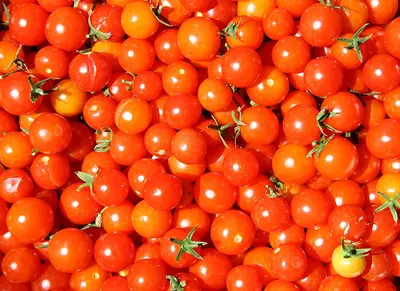
Sweet 100 is a prolific hybrid cherry tomato that produces abundant clusters of small, round fruits averaging ½ inch in diameter. The plant matures in approximately 60 days and yields continuously throughout the growing season. Bright red fruits develop intense sweetness with well-balanced acidity and a characteristic juicy burst when bitten. This indeterminate variety is exceptional for snacking directly off the vine and performs reliably in containers or gardens. Sweet 100 is prized by home gardeners for its disease resistance and vigorous growth habit, making it an ideal choice for beginners and experienced growers alike.
Harvest
60d
Days to harvest
Sun
Full sun
Zones
10–11
USDA hardiness
Height
1-10 feet
Planting Timeline
Showing dates for Sweet 100 in USDA Zone 7
All Zone 7 tomato →Zone Map
Click a state to update dates
Sweet 100 · Zones 10–11
Growing Details
Complete Growing Guide
Sweet 100 produces prolifically in warm conditions, so plant after all frost danger passes and soil reaches 60°F, as this indeterminate variety thrives in sustained heat and will struggle if planted too early. Unlike determinate types, expect vigorous vine growth reaching 6–10 feet, requiring sturdy stakes or trellising from the start to manage productivity and improve air circulation—critical since indeterminate cherries are prone to fungal diseases in humid conditions. Watch for early blight and powdery mildew, especially on lower foliage; remove suckers ruthlessly to reduce disease pressure and redirect energy into fruit production rather than excessive vegetative growth. The variety's tendency to set 12–18 fruits per cluster can exhaust plants if not supported with consistent watering and balanced fertilization throughout the season. Pinch off flower clusters in late summer (6–8 weeks before first frost) to concentrate sugars in remaining fruit rather than starting new flowers that won't ripen.
Light: Full sun (6 or more hours of direct sunlight a day). Soil: Clay, High Organic Matter, Loam (Silt), Sand. Soil pH: Acid (<6.0), Neutral (6.0-8.0). Drainage: Good Drainage, Moist. Height: 1 ft. 0 in. - 10 ft. 0 in.. Spread: 1 ft. 0 in. - 4 ft. 0 in.. Spacing: 3 feet-6 feet. Growth rate: Rapid. Maintenance: High. Propagation: Seed. Regions: Coastal, Mountains, Piedmont.
Harvesting
Sweet 100 tomatoes reach peak harvest readiness when they develop a deep red color throughout and achieve a slight give when gently squeezed, typically weighing around 1½ to 2 ounces. Unlike single-harvest varieties, Sweet 100 produces fruit continuously throughout the season, with clusters of 12–18 fruits maturing in succession rather than all at once, making regular picking essential to encourage ongoing production. For optimal flavor and shelf life, harvest fruits in the morning after the dew dries but before intense afternoon heat, as this timing preserves juice content and reduces stress on the vine. The vine's indeterminate growth habit means consistent harvesting over weeks or months will maximize your yield far more than waiting for entire clusters to ripen simultaneously.
The fruits are smooth, shiny, glossy, and are classified as berries. The size, shape, and color will vary depending on the variety or cultivar. The color of the fruits may be red, yellow, orange, green, purple, or pink. The fruits may contain over 100 yellow to light brown seeds.
Color: Gold/Yellow, Green, Orange, Pink, Purple/Lavender, Red/Burgundy, Variegated. Type: Berry. Length: > 3 inches. Width: > 3 inches.
Garden value: Edible, Showy
Harvest time: Fall, Summer
Edibility: The fruits or berries of the tomato are edible. They may be eaten raw, cooked, dried, or processed. They are a rich source of Vitamin A, Vitamin C, folic acid, and antioxidants. Lycopene is an antioxidant that gives the tomato its rich red color. Many plants will drop fruit when ripe or the fruit will come off easily. Tomatoes will continue to ripen once picked. Store them at room temperature.
Storage & Preservation
Store freshly harvested Sweet 100 tomatoes at room temperature away from direct sunlight, around 68–72°F with moderate humidity. Keep them in a single layer in a breathable container like a cardboard box or paper bag—plastic traps moisture and promotes rot. Whole tomatoes will keep for 5–7 days this way; refrigeration below 55°F damages flavor and texture, so avoid it unless you're storing overripe fruit for immediate use.
These cherry tomatoes excel at whole-fruit preservation. Freeze them raw on a baking sheet, then transfer to freezer bags—the thin skins burst easily when thawed, making them ideal for sauces and soups. For canning, pack whole fruits in hot jars with a light vinegar brine at a ratio of 1 part vinegar to 3 parts water, processing pints for 35 minutes. Sun-drying works well given their high sugar content and dense flesh. Their exceptional juiciness makes them particularly suited to fermentation—layer with salt in jars for a tangy condiment ready in 2–3 weeks.
History & Origin
Introduced by Seed Savers Exchange and later popularized by various seed companies, Sweet 100 emerged during the late 20th-century home gardening revival when breeders focused on developing prolific cherry tomato cultivars with superior flavor. While the specific breeder and exact year of origin remain somewhat obscure in published records, the variety belongs to a lineage of indeterminate cherry tomatoes that gained momentum in American home gardens during the 1980s and 1990s. Sweet 100 represents the era's emphasis on abundant yields and intense sweetness, traits that distinguished it from earlier cherry tomato varieties and made it a commercial success among seed catalogs catering to home gardeners seeking productive, flavorful plants.
Origin: Peru
Advantages
- +Exceptionally sweet flavor with balanced acidity and juicy bursts
- +Produces abundant 12-18 fruits per cluster on indeterminate vines
- +Excellent crack resistance and impressive shelf life for cherry tomatoes
- +Disease-resistant variety winning AAS award for reliability
- +Versatile for salads, salsa, and fresh pasta sauce
Considerations
- -Susceptible to late blight, early blight, and tobacco mosaic virus
- -Vulnerable to common pests including aphids, whiteflies, and spider mites
- -Requires indeterminate support structure and consistent pruning throughout season
- -Extended 60+ day maturity means longer wait for first harvest
Companion Plants
Basil and French marigolds (Tagetes patula) are the two worth planting within a foot or two of Sweet 100. Basil's volatile oils may disrupt aphid and thrips orientation — the evidence is mixed, but both crops want the same heat and consistent moisture, so there's no scheduling penalty for growing them side by side. French marigolds produce alpha-terthienyl in their roots, which suppresses root-knot nematodes (Meloidogyne spp.) in the surrounding soil — a real benefit given that NC State Extension notes soilborne pressure is a persistent problem for tomatoes, hybrid or otherwise. Keep fennel out of the bed entirely: it releases allelopathic compounds that stunt most vegetables nearby, and brassicas planted close will compete aggressively for calcium and water without doing anything useful for the tomatoes in return.
Plant Together
Basil
Repels aphids and whiteflies, may improve flavor
Marigold
Deters nematodes and aphids with natural compounds
Nasturtium
Acts as trap crop for aphids and cucumber beetles
Parsley
Attracts beneficial insects like hoverflies and parasitic wasps
Carrots
Help break up soil and don't compete for nutrients
Borage
Repels hornworms and may improve tomato growth
Chives
Repel aphids and may deter some fungal diseases
Peppers
Similar growing requirements and compatible root systems
Keep Apart
Black Walnut
Produces juglone toxin that causes tomato wilt
Fennel
Inhibits growth of most garden plants through allelopathy
Brassicas
Compete for nutrients and may stunt tomato growth
Corn
Both attract corn earworm which also damages tomatoes
Nutrition Facts
Per 100g serving. % Daily Value based on 2,000 calorie diet. Source: USDA FoodData Central (FDC #321360)
Pests & Disease Resistance
Resistance
Early Blight (Intermediate); Late Blight (Intermediate)
Common Pests
Aphids, whiteflies, spider mites, tomato fruitworm
Diseases
Late blight, early blight, tobacco mosaic virus
Troubleshooting Sweet 100
What you'll see, why it happens, and what to do about it.
Large patches of foliage turning gray-green and collapsing fast — sometimes overnight — with dark, water-soaked spots appearing on fruit
Likely Causes
- Late blight (Phytophthora infestans) — moves fast in cool, wet weather and can wipe a plant in days
- Overcrowded planting with poor airflow speeding spore spread
What to Do
- 1.Pull and bag affected plants immediately — do not compost them; late blight spreads to neighbors fast
- 2.Apply a copper-based fungicide to plants that still look clean, starting at first sign of disease in your area
- 3.NC State Extension IPM notes the rotation period for some tomato diseases may run five to seven years — don't put tomatoes or potatoes back in that bed anytime soon
Lower leaves developing brown bullseye-ringed spots with yellowing around the lesions, starting around day 45 after transplant
Likely Causes
- Early blight (Alternaria solani) — soil-borne fungus that splashes up onto lower leaves during rain or overhead watering
- Bare soil under the plant with no mulch to intercept splash
What to Do
- 1.Strip the spotted lower leaves and throw them in the trash, not the compost bin
- 2.Lay 3–4 inches of straw mulch under the plant to stop soil splash
- 3.Switch to drip or soaker hose so you're not wetting the foliage at all
Clusters of tiny soft-bodied insects on new growth; leaves curling, sticky residue on stems, possibly with a black sooty coating developing on the surface
Likely Causes
- Aphids (commonly Macrosiphum euphorbiae on tomato) — reproduce fast in warm weather and are capable of transmitting Tobacco mosaic virus
- Whiteflies (Trialeurodes vaporariorum) produce the same sticky honeydew and sooty mold combination and are easy to mistake for aphids at a glance
What to Do
- 1.Knock aphids off with a firm stream of water from the hose — do this in the morning so foliage dries before evening
- 2.Spray insecticidal soap directly on the insects, covering undersides of leaves; repeat every 5–7 days until populations drop
- 3.Pull back on high-nitrogen fertilizer mid-season — the flush of soft new growth it triggers is exactly what these insects target
Frequently Asked Questions
How long does Sweet 100 tomato take to grow?▼
Can you grow Sweet 100 tomatoes in containers?▼
Is Sweet 100 tomato good for beginners?▼
What does Sweet 100 tomato taste like?▼
Sweet 100 vs Sweet Million tomato - what's the difference?▼
When should I plant Sweet 100 tomatoes?▼
Zone-by-Zone Planting Calendar
| Zone | Indoor Start | Transplant | Direct Sow | Harvest |
|---|---|---|---|---|
| Zone 3 | April – April | June – July | — | August – October |
| Zone 4 | March – April | June – June | — | August – October |
| Zone 5 | March – March | May – June | — | July – September |
| Zone 6 | March – March | May – June | — | July – September |
| Zone 7 | February – March | April – May | — | July – September |
| Zone 8 | February – February | April – May | — | June – August |
| Zone 9 | January – January | March – April | — | May – July |
| Zone 10 | January – January | February – March | — | May – July |
| Zone 1 | May – May | July – August | — | September – August |
| Zone 2 | April – May | June – July | — | September – September |
| Zone 11 | January – January | January – February | — | April – June |
| Zone 12 | January – January | January – February | — | April – June |
| Zone 13 | January – January | January – February | — | April – June |
Growing Guides from Wind River Greens
Sources & References
External authority sources used in compiling this guide.
See the Methodology page for how this data is sourced, what's AI-assisted, and known limitations.